
Portable water filter travel questions usually come down to one thing, can you trust the water when you are miles from a tap and too tired to gamble. For trekking, the answer is rarely a simple yes or no because water quality changes fast with weather, wildlife, and upstream activity.
If you get this choice wrong, you may not notice until hours later, when you are already committed to the route. If you get it right, you drink more, recover better, and stop treating every creek like a risk you must “push through.”
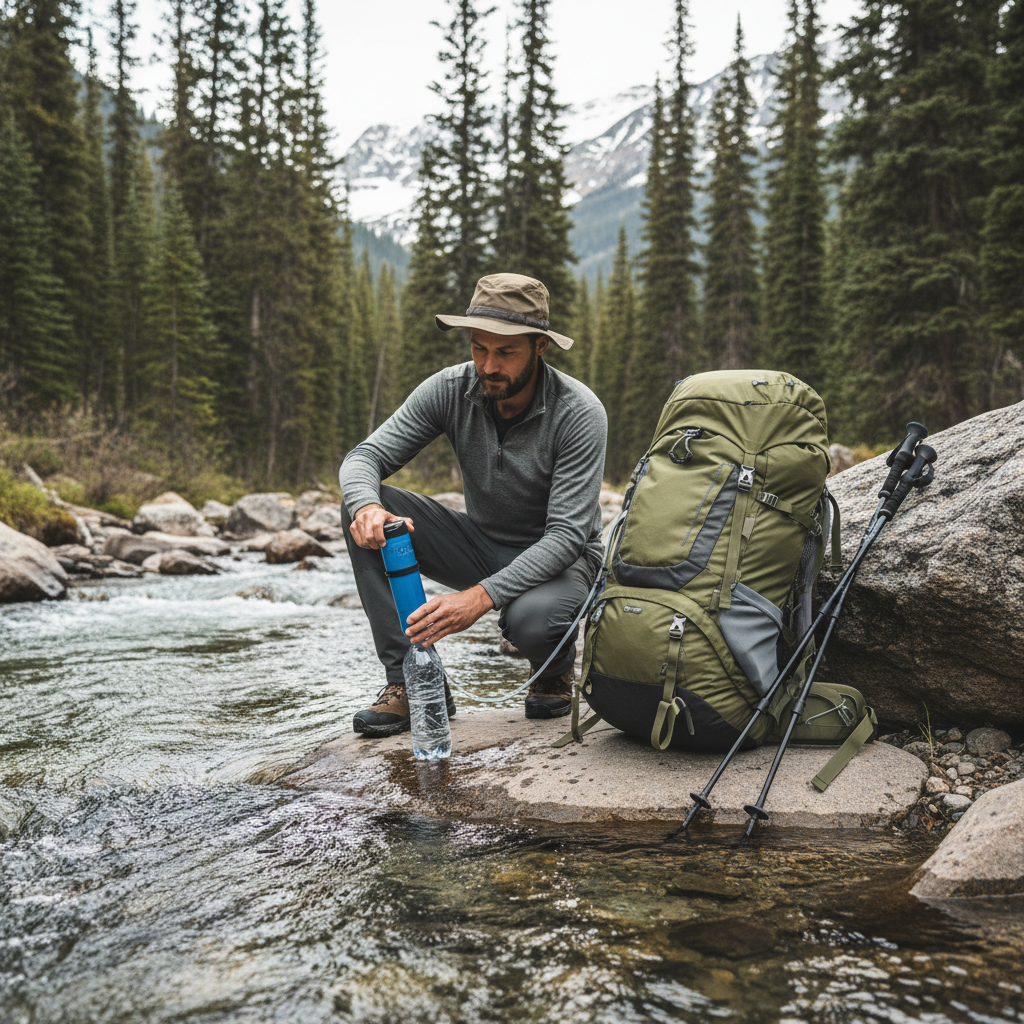
People also mix up “filtering” and “purifying.” Filters are great at removing protozoa and bacteria, but many common setups do not handle viruses unless they use a purifier, chemical treatment, or UV. This guide helps you pick a practical setup, use it correctly, and avoid the mistakes that quietly ruin performance.
What can actually be in backcountry water
In the U.S., most trekking water concerns fall into a few buckets, and each bucket points to a different treatment choice.
- Protozoa (like Giardia, Cryptosporidium): common in many environments, tough on the stomach, and typically handled by filters with appropriate pore size.
- Bacteria (like E. coli): often tied to runoff, livestock, or heavy recreation areas, and usually handled by common backpacking filters.
- Viruses (like norovirus, hepatitis A): generally more associated with human waste contamination, risk varies by location and conditions, and many filters alone may not address them.
- Sediment: makes water taste gritty, clogs filters, and can reduce the effectiveness of UV devices.
- Chemicals (pesticides, fuel, heavy metals): much harder, many portable options do not reliably remove these, so source selection matters a lot.
According to CDC (Centers for Disease Control and Prevention), untreated water can carry germs that cause diarrhea and other illness, and safe drinking practices matter when outdoors. That is the baseline, the tricky part is choosing a method that matches your realistic risk.
Filter vs purifier vs chemicals vs UV, the short, useful version
You do not need a lab mindset, you need a decision that fits your routes and habits. Here is the practical difference most trekkers care about.
- Microfilters: great for bacteria and protozoa, fast, usually no wait time, can clog in silty water.
- Purifiers (some pump systems, some gravity setups, some bottles): designed to address viruses too, often heavier or slower, sometimes cost more.
- Chemical treatment (chlorine dioxide, iodine): very packable, good backup, requires wait time, taste varies, cold water often needs longer contact time.
- UV: fast and lightweight, depends on batteries, struggles with cloudy water unless you pre-filter.
For a lot of U.S. mountain trekking, a filter plus smart water sourcing is the common “workhorse” solution, while virus coverage becomes more important near high-use areas, international travel, disaster response, or anywhere sanitation is questionable.
Quick self-check: what setup fits your trip
If you are stuck comparing gear pages, pause and answer these. Your answers usually narrow the field fast.
- Group size: solo and pairs often prefer squeeze or pump filters, groups often prefer gravity systems.
- Water source: clear streams favor most filters, glacial melt and desert potholes punish them unless you pre-filter.
- Daily mileage: long days favor speed and easy squeezing, short days can tolerate slower gravity or chemical methods.
- Virus risk: if you will be near dense camps, huts, or downstream of settlements, consider purifier capability or combine filter + chemical.
- Cold risk: if temps drop near freezing, any wet filter can be damaged by ice, which changes how you store it at night.
If you want a simple rule that usually holds, pick the lightest system you will actually use every time, not the most “complete” system you will skip when tired.
Choosing a portable water filter for travel and trekking
When people search for portable water filter travel options, they often buy based on weight alone, then realize the workflow is annoying. In practice, ease of use is part of safety because it determines whether you treat all your water.
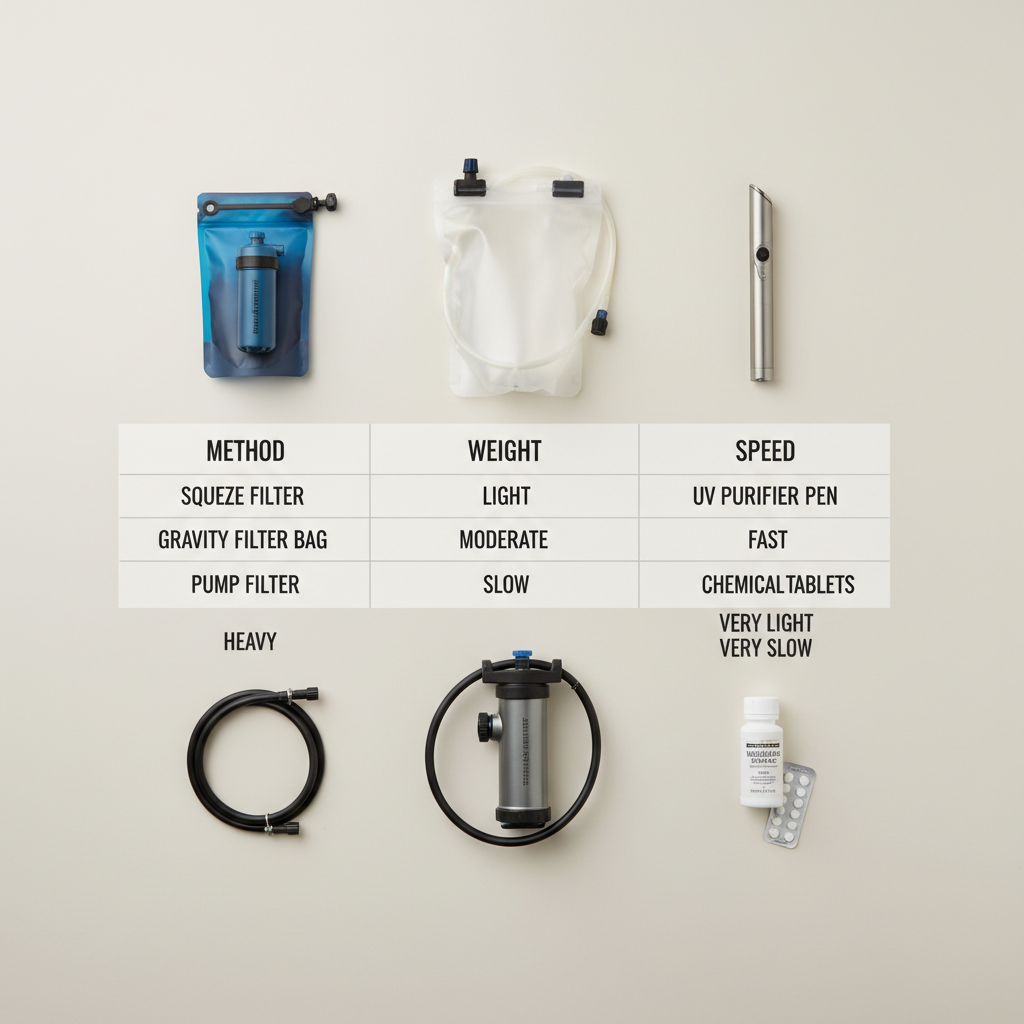
Use this table as a practical starting point, then match it to your route and habits.
Common options compared
| Option | Best for | Trade-offs | Reality check |
|---|---|---|---|
| Squeeze filter | Solo/ultralight, fast refills | Bag can fail, squeezing gets old | Great if you like drinking on the move |
| Gravity filter | Groups, camp chores | Slower, needs hang point | Feels effortless once set up |
| Pump filter | Shallow sources, controlled intake | Heavier, moving parts | Nice when water is scarce or silty |
| UV purifier | Clear water, fast treatment | Batteries, not for cloudy water | Excellent backup if you manage power |
| Chemical treatment | Backup, emergencies, travel | Wait time, taste, cold slows it | Pairs well with a filter for viruses |
Key points I look for when recommending one
- Workflow: can you fill, treat, and drink without spilling or fussing.
- Field maintenance: backflushing or cleaning should be doable without babying the system.
- Container compatibility: it should fit what you already carry, bottles, bladders, or a soft bag.
- Realistic capacity: if you hate waiting, you need faster flow or a second dirty bag.
- Backup plan: tablets or drops weigh little and cover you when a filter clogs or freezes.
A simple, repeatable water routine on trail
This is the part many people skip, then wonder why their “good filter” feels unreliable. A routine makes your setup feel boring, and boring is what you want for drinking water.
Step-by-step that works in most trekking situations
- Pick a better source first: moving water beats stagnant when you have a choice, and upstream of trails, camps, and crossings is usually cleaner.
- Pre-filter when water is cloudy: a bandana or coffee filter removes grit, improves taste, and protects your main filter.
- Filter into a dedicated clean bottle: avoid mixing “dirty” and “clean” containers, especially when hands are messy.
- If virus risk feels plausible: combine filter + chemical, or use a true purifier, the extra step is annoying but may be worth it in certain areas.
- At camp: make enough treated water for cooking and tomorrow morning so you do not cut corners when tired.
According to EPA (United States Environmental Protection Agency), water that looks clean may still contain contamination, so relying on clarity alone is not a good test. Treating consistently is usually more important than debating one “perfect” device.
Common mistakes that quietly cause problems
Most issues people blame on the product are really usage problems. A few are genuinely about choosing the wrong tool for the job.
- Letting a filter freeze: many hollow-fiber filters can be damaged by freezing when wet, and the hard part is you may not be able to tell. If you suspect freezing, consider switching to chemical treatment and consult the manufacturer guidance.
- Cross-contamination: dirty hands touching bottle threads, caps, or mouthpieces can undo your effort.
- Ignoring backflushing: flow slows, then people squeeze harder, then bags fail, and everyone is mad. Keep it clean early, not late.
- Using UV in cloudy water: UV needs light to reach microbes, so sediment becomes a real limitation.
- Overtrusting carbon: carbon helps taste and some chemicals, but it is not a broad safety solution on its own.
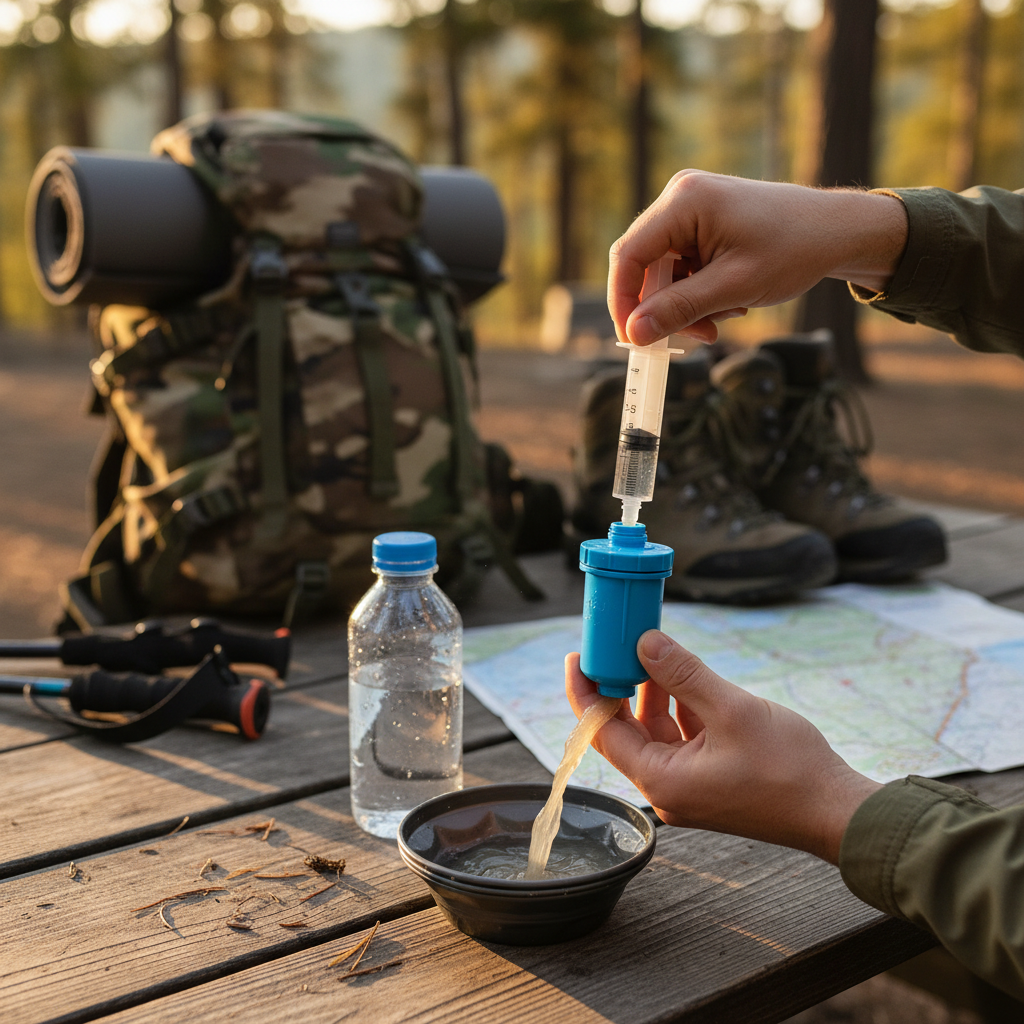
If you are traveling and trekking back-to-back, also watch for “airport and hotel” habits creeping onto trail, like storing your filter wet in a sealed bag for days, mildew and odors become the next problem you must solve.
When you should upgrade your approach or ask a professional
Sometimes a basic filter is not the right call, and pretending it is “fine” can be the risky move. Consider stepping up or getting local guidance if any of these are true.
- You suspect chemical contamination from mining, agriculture, or industrial runoff, many portable systems may not address this reliably, so avoid the source when possible.
- You are immunocompromised, pregnant, or traveling with very young kids, a conservative approach is reasonable, and discussing risks with a clinician may help.
- You are heading to remote routes without bailout, redundancy matters more, carry a backup treatment and know how to use it.
- You will trek internationally where virus risk may be higher in some settings, purifier capability or combined methods can make sense.
On guided trips, asking the local guide service what they use is not “cheating,” it is often the fastest way to understand what risks show up on that specific route.
Practical takeaway: a smart default kit for most trekkers
If you want a starting kit that covers most scenarios without turning into a science project, this is a reasonable baseline for many U.S. trekking trips.
- Main treatment: a reputable microfilter you find easy to use every day
- Backup: chlorine dioxide tablets or drops for failures, questionable sources, or suspected freezing damage
- Pre-filter: bandana or small cloth for silty water
- Clean/dirty separation: one “dirty” bag or bottle, one “clean” bottle you only drink from
Key point: the “best” system is the one you will use when you are cold, hungry, and ready to be done for the day. If your setup fights you, you will eventually skip a step.
Conclusion: pick the method you will actually stick with
Portable water filter travel planning for trekking is really about consistency, source choice, and a setup that fits your pace. A solid filter handles a lot of what most trekkers face, but combining methods may be smarter when sanitation risk rises or when you cannot trust the environment.
Your next move can be simple: choose one primary system, add a lightweight backup, then practice the routine at home so you are not learning it at the first creek crossing.
FAQ
What is the best portable water filter travel option for trekking in the U.S.?
For many routes, a microfilter from a well-known outdoor brand is a practical choice because it is fast and simple. The “best” depends on whether you hike solo, how silty your water is, and whether virus coverage matters in your area.
Do I need a purifier for viruses on most backpacking trips?
Often, virus risk is considered lower in many U.S. wilderness settings, but it can increase near heavy-use areas or poor sanitation. If you are unsure, a cautious approach is filter plus chemical treatment, or a purifier designed for viruses.
Is boiling better than using a portable filter?
Boiling can be very effective against microbes when done properly, but it costs time and fuel, and it does not remove chemical contaminants. Many trekkers prefer filtration for day-to-day convenience and keep boiling as a situational option.
Why does my filter slow down so much after a few days?
Clogging from sediment is the usual cause. Pre-filtering cloudy water and backflushing early helps a lot, and in some cases switching to a pump system for shallow, silty sources feels easier.
Can I drink straight from a filter bottle in airports or foreign cities?
Sometimes, but it depends on what the bottle is designed to remove. Many bottle filters focus on taste and some microbes, not every pathogen type, so check the manufacturer claims and consider local conditions.
What should I do if my filter might have frozen overnight?
Treat it as potentially compromised, because damage is not always visible. If you have chemical backup, use it, and review the manufacturer guidance; when in doubt, replacing the filter is the conservative move.
How do I avoid cross-contamination when filtering water?
Keep dirty and clean containers separate, avoid touching clean bottle threads with wet/dirty hands, and store the clean cap where it will not pick up grit. Small habits make a big difference over a long trip.
Does a carbon filter make water safe?
Carbon mainly improves taste and can reduce some chemicals, but it is not the same as removing pathogens. Pairing carbon with proper filtration or disinfection is more realistic if safety is your goal.
If you are trying to choose a portable setup but you keep bouncing between options, it may help to list your usual water sources, group size, and whether you want a “fast on the move” system or a “set it up at camp” system, that decision alone narrows the shortlist quickly.