
Best travel journal for women 2026 usually comes down to one thing: will you actually use it after day three of the trip, when you’re tired, your bag is full, and the “I’ll write tonight” promise starts slipping.
A good journal makes it easy to capture what you’ll forget later, the tiny moments, the places you loved, the people you met, and the lessons you don’t want to relearn. A not-so-good one turns into another pretty notebook that stays blank.
This guide helps you choose by travel style, not hype. You’ll get a quick comparison table, a self-check list, and practical setups for weekend trips, long-term travel, and work-heavy itineraries.
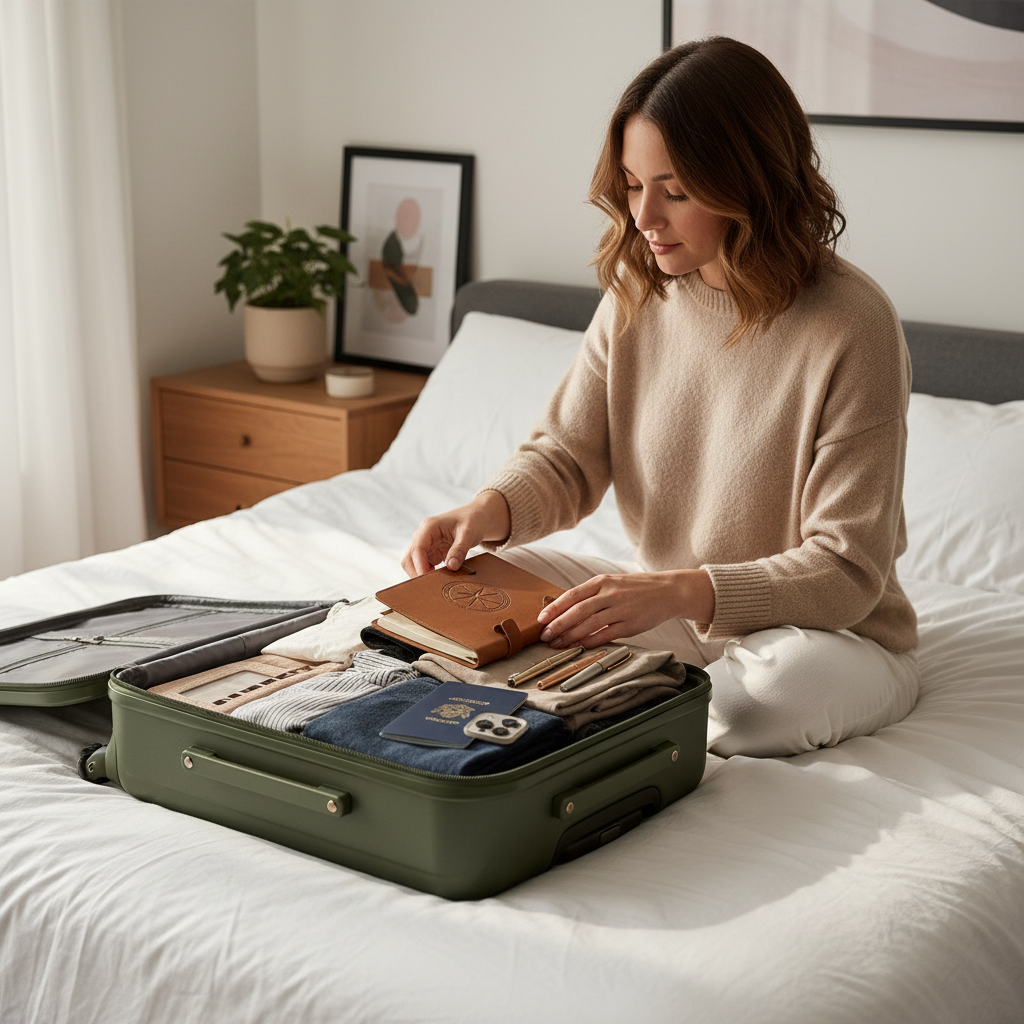
What “best” really means in 2026 (and what it doesn’t)
In 2026, the “best” journal isn’t automatically the most aesthetic one, it’s the one that matches your energy level and how you travel. For some people that’s a guided prompt book, for others it’s a minimal dot-grid that doesn’t tell them what to feel.
Also, don’t over-index on paper quality alone. Yes, fountain-pen friendly pages feel great, but if the journal is heavy, precious, or complicated, many travelers abandon it.
- Best for consistency: simple layout, fast prompts, lies flat, pen loop.
- Best for memory keeping: space for photos/tickets, pockets, thicker pages.
- Best for reflection: thoughtful prompts, weekly recap sections.
- Best for planning: itinerary pages, budget trackers, checklists.
Quick comparison: travel journal formats (pick the one you’ll use)
If you’re deciding between a few types, this table usually clears things up fast.
| Format | Who it fits | Pros | Watch-outs |
|---|---|---|---|
| Guided prompts | First-time journalers, busy itineraries | Low effort, reduces blank-page anxiety | Can feel repetitive, less flexible |
| Dot grid / blank | Creative travelers, sketchers | Flexible, great for maps and layouts | Easy to procrastinate, needs structure |
| Lined notebook | Daily writers, story-focused | Fast to write, familiar feel | Less visual, harder to paste keepsakes |
| Planner-style travel log | Trip organizers, family travel | Tracks routes, spending, reservations | Can become “work,” less emotional capture |
| Hybrid (prompts + blank pages) | Most travelers | Structure plus freedom | Quality varies by brand |
Features that matter (and the ones you can ignore)
When people search for the best travel journal for women 2026, they often focus on cover art and forget the practical stuff. Here’s what tends to matter once you’re on the move.
High-impact features
- Lay-flat binding: writing on a train or in bed gets easier.
- Paper that handles your pen: if you use gel pens, look for less bleed-through.
- Pocket or envelope: tickets, transit cards, small receipts, pressed flowers.
- Elastic closure: keeps loose items from escaping in your bag.
- Size that fits your carry: A5 is common, but passport size wins for light packers.
Nice-to-have (only if it matches your style)
- Destination checklists and packing lists, helpful for frequent flyers who hate repeating decisions.
- Budget and expense pages, great for long trips, overkill for a weekend.
- Sticker sheets and decorative add-ons, motivating for some, distracting for others.
If you’re trying to journal daily, prioritize ease of use over extras. Most abandoned journals are too “perfect” to touch.
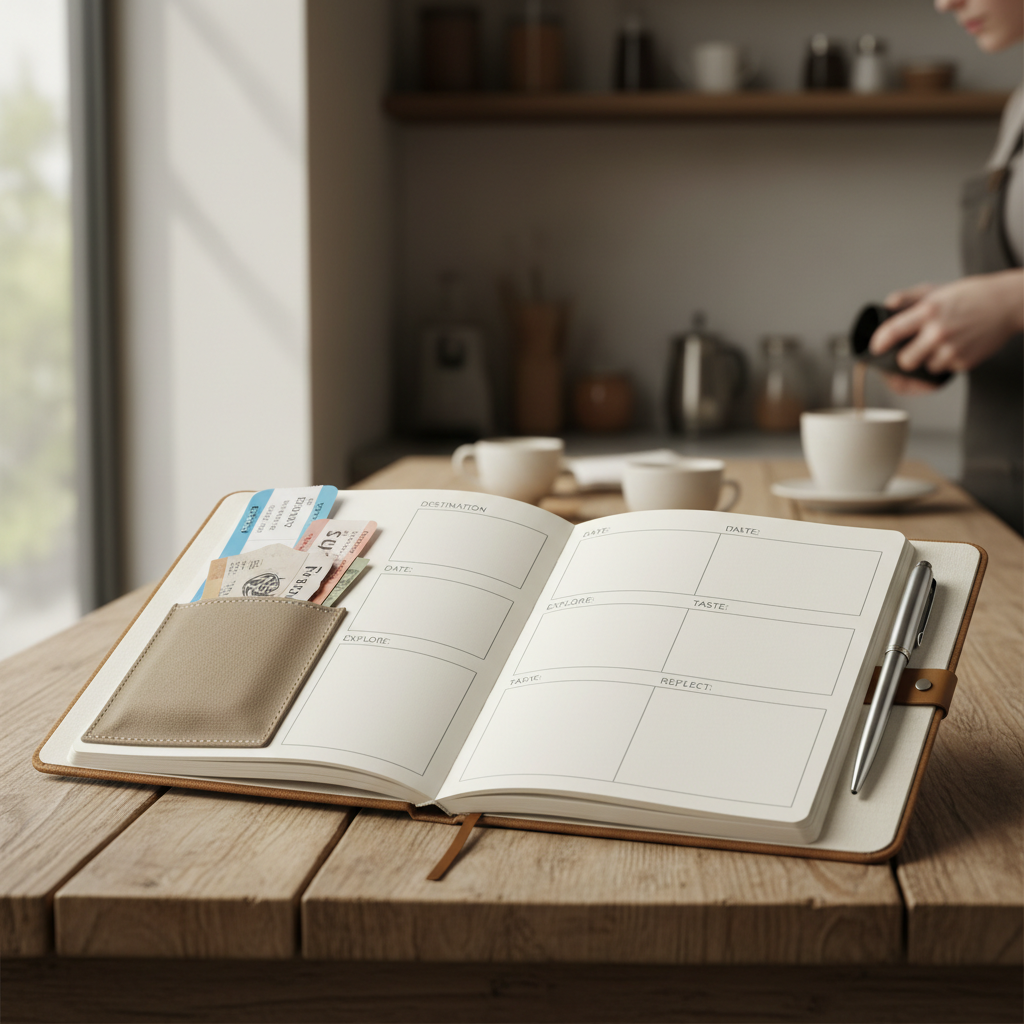
Self-check: which journal type fits your travel personality?
Answer these quickly, then choose the format that matches your real habits, not your “vacation fantasy self.”
- I want something I can fill in within 5 minutes. → Guided prompts or hybrid.
- I love photos, scraps, and tactile memories. → Thicker paper + pocket, scrapbook-friendly.
- I process emotions by writing long entries. → Lined notebook or hybrid with plenty of free pages.
- I’m traveling for work and need records. → Planner-style travel log.
- I sketch, map, and doodle. → Dot grid or blank.
- I tend to quit if I miss a day. → Undated pages, flexible prompts, no “daily” pressure.
One more honest question: do you usually journal during the trip, or after you’re back? If you’re an “after” person, leave space for photos and do quick notes on the go.
How to set it up so it survives a real trip (not just day one)
The setup that works is usually boring, and that’s the point. Make it frictionless.
A simple 3-part system most people stick with
- Trip opener (10 minutes): why this trip, what you want to remember, one intention.
- Daily quick log (3–7 minutes): where you went, what you ate, a highlight, a lowlight, one small detail.
- Wrap-up page (15 minutes): favorites, lessons, what you’d do differently next time.
If you’re short on time: use “receipt journaling”
Keep the journal as a capture tool. Tape in one receipt or ticket per day and write three sentences: what happened, what surprised you, what you’d tell a friend.
Pen choices that reduce mess
Gel pens and fineliners often behave well on midweight paper, while fountain pens can feather on thinner pages. If you’re unsure, test your pen on the last page before committing.
Safety, privacy, and emotional boundaries (yes, they matter)
Travel journaling can include sensitive details: where you’re staying, who you met, and personal reflections. That’s meaningful, but it’s also information you may not want floating around.
- Skip exact addresses: write neighborhood names, not door numbers.
- Use initials for new people: especially on solo trips.
- Keep a “private page” code: a symbol that means “don’t read,” helpful if you travel with family or roommates.
- Back up photos separately: the journal can get lost, soaked, or stolen.
According to U.S. Department of State, travelers should review destination-specific safety information and prepare accordingly. A journal won’t replace safety planning, but it can help you track what happened if something goes wrong.
2026 shopping checklist: how to choose before you buy
Use this as your “don’t get distracted” list while browsing.
- Pick your format first: prompts, lined, dot-grid, planner, or hybrid.
- Choose a size you’ll carry: if it won’t fit your day bag, you’ll stop using it.
- Decide your use case: memory keeping, planning, reflection, or a mix.
- Check binding and closure: lay-flat and elastic are small upgrades you feel daily.
- Look for keep-sake space: pocket, envelope, or at least thicker pages.
- Don’t overbuy pages: a smaller journal you finish beats a huge one you abandon.
Key takeaway: the best travel journal for women 2026 is the one that fits your actual travel rhythm, feels easy to open, and gives you a simple way to record the day even when you’re tired.
Conclusion: the “best” choice is the one you’ll fill
If you want a journal you’ll keep using, choose your format based on how you naturally capture memories, quick prompts for consistency, blank space for creativity, planning pages for logistics-heavy trips. Then make the habit tiny: five minutes, one page, done.
Your next step is simple: pick one format, decide whether you’re a daily writer or a quick-note collector, and set up your first page before you leave. That small start makes the whole thing feel less precious, and a lot more real.