
Best travel guide for switzerland planning usually fails in the same two places: people underestimate how long it takes to move between valleys, and they overbook “must-dos” without leaving room for weather, crowds, or simple rest. This guide fixes that with practical routing, pass choices, and a few sanity-saving rules that make Switzerland feel smooth, not stressful.
If you’re traveling from the U.S., Switzerland can look small on a map, but the terrain changes everything. A 90-minute train ride might be easy, yet the door-to-door time with a cable car connection, a lake boat, and a hotel check-in can quietly eat half a day. Build your plan around that reality and you’ll enjoy the country more.
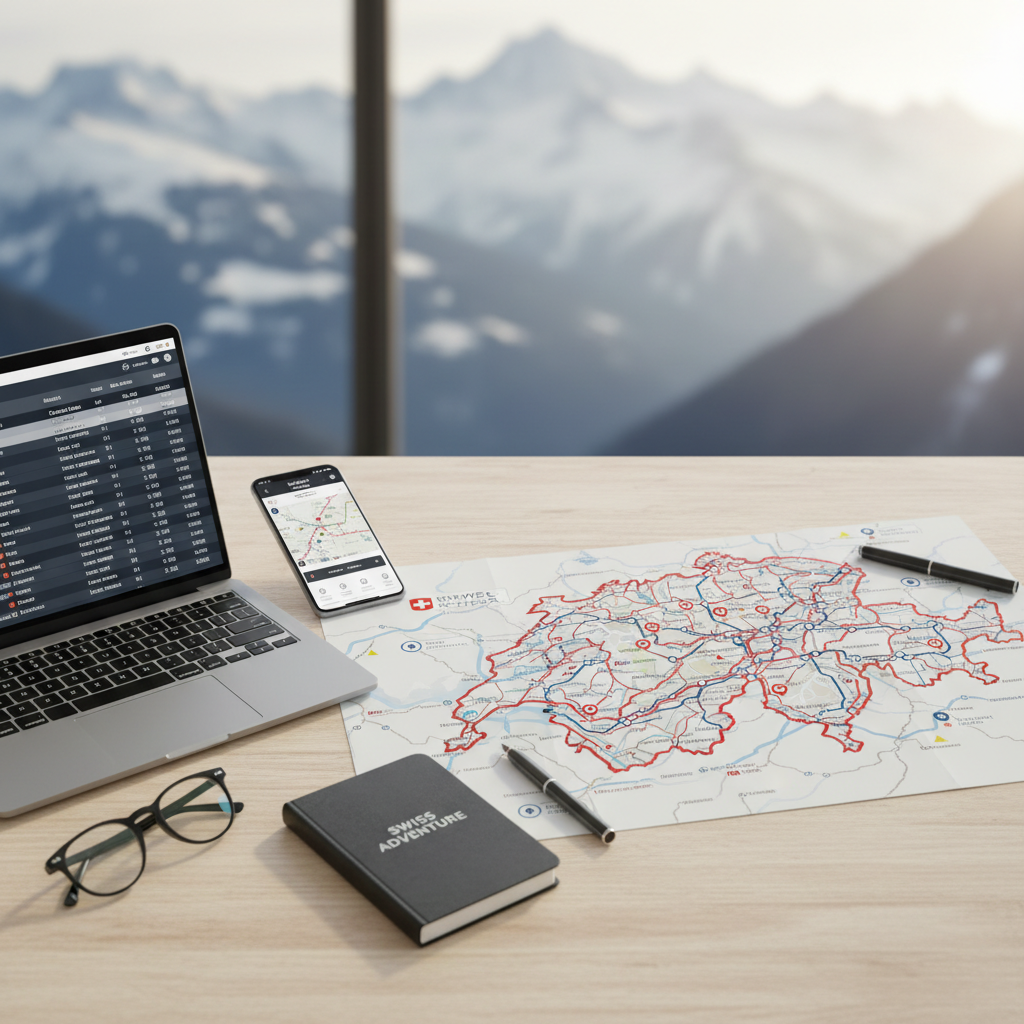
You’ll also see a lot of advice that sounds universal, like “base in Interlaken” or “buy the Swiss Travel Pass.” Sometimes that’s perfect, sometimes it’s an expensive detour. I’ll show you how to choose based on your trip length, which regions you want, and how you prefer to travel.
Key takeaways you can use immediately:
- Pick 2–3 regions, not the whole country, then plan day trips outward.
- Count connections (train + boat + cable car) before you call something “close.”
- Choose passes after you sketch a draft route, not before.
- Always add a weather buffer for mountain days.
How to choose the right Switzerland “home bases”
The fastest way to ruin a great itinerary is changing hotels every night. Switzerland rewards slower pacing, even for first-timers. A good rule: one base per region, with day trips that return you to the same bed.
Common base patterns that work well for U.S. travelers:
- Zurich or Lucerne for easy arrival, lakes, and classic rail day trips.
- Bernese Oberland (Interlaken, Lauterbrunnen, Wengen) for iconic alpine scenery.
- Zermatt for Matterhorn-focused hiking and car-free village vibes.
- Montreux / Lausanne for Lake Geneva, vineyards, and a softer pace.
- St. Moritz / Pontresina for Engadin valley and panoramic rail routes.
One reality check: Interlaken is convenient, but it’s also a transit hub. If you want quieter mornings, staying in Lauterbrunnen, Wengen, or Mürren can feel more “Swiss postcard,” with the tradeoff of extra connections.
2026 itinerary templates (7, 10, 14 days)
These are intentionally “light” templates. The best travel guide for switzerland is the one that leaves time for a slow lunch and a late-afternoon lake walk, because that’s often what you remember.
7 days: highlights without sprinting
- Days 1–2: Zurich or Lucerne (lake + old town + one easy mountain)
- Days 3–5: Bernese Oberland base (Jungfrau region villages + one big viewpoint day)
- Days 6–7: Zermatt or Montreux (choose mountains or lake culture)
10 days: add a second “big scenery” region
- Days 1–2: Zurich/Lucerne
- Days 3–6: Bernese Oberland
- Days 7–9: Zermatt
- Day 10: Return via scenic rail, final night near departure airport
14 days: include a different language region or Engadin
- Days 1–3: Zurich + Lucerne
- Days 4–8: Bernese Oberland
- Days 9–11: French-speaking side (Montreux/Lausanne) or Engadin
- Days 12–14: Zermatt + departure positioning
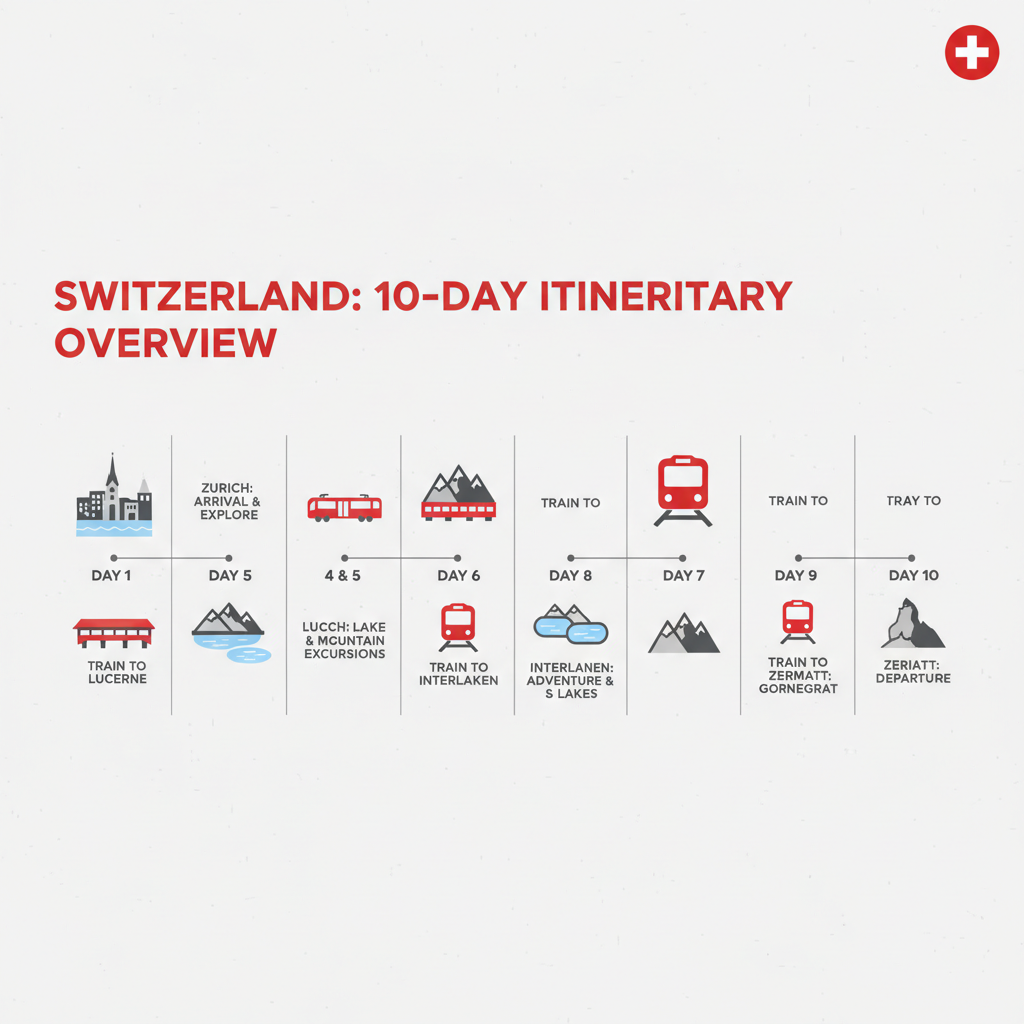
For all three, try to place your “hard to move” days back-to-back. Mountain villages take longer to enter and exit, so bouncing in and out costs you more than you think.
Train passes and tickets: what to buy (and what to skip)
Pass advice online gets messy because the “right” answer depends on how many long-distance days you have, how many mountain railways you’ll ride, and whether you value flexibility over price. According to SBB (Swiss Federal Railways)... point-to-point tickets can be bought close to departure in many cases, while saver fares typically require earlier booking and come with restrictions.
Here’s a decision table you can actually use:
| Option | Best for | Watch-outs |
|---|---|---|
| Point-to-point tickets | Simple routes, fewer long rides, fixed schedule | Saver fares can limit flexibility, refunds vary |
| Swiss Travel Pass | Many train/boat/bus days, you want convenience | Not always cheapest, some mountain lifts discounted not free |
| Half Fare Card | Mixed travel with pricey excursions, longer stays | You still buy tickets, savings depend on volume |
| Regional passes | Staying in one region with repeated lifts/trains | Coverage rules vary by region, read inclusions carefully |
A practical workflow: draft your route, list the big travel days and the big mountain rides, then compare. If you only do two or three long-distance train days, a full national pass may feel convenient but not efficient.
Mountains, lakes, and cities: how to prioritize what you’ll love
People ask for “the best” viewpoint, the “best” lake, the “best” village. The truth is Switzerland’s top sights are all strong, so your best move is picking what matches your travel personality.
- If you like dramatic peaks: prioritize Zermatt and the Jungfrau region, keep plans weather-flexible.
- If you like water + strolling: focus on Lucerne, Lake Geneva towns, and boat days.
- If you like food/culture: add Basel, Bern, Lausanne, or Zurich museums between mountain blocks.
- If you hate crowds: start early, sleep in smaller villages, and don’t stack “famous” peaks on weekends.
And yes, a lot of “must-see” mountains can be swapped. If visibility is poor, don’t force a summit ticket just because it’s on your list. Move that day to a lake cruise or a town, then try again later.
A realistic budget and booking plan for U.S. travelers
Switzerland often feels expensive because the baseline quality is high: transit is reliable, cities are tidy, hotels include more, and restaurant portions can be generous. The best travel guide for switzerland won’t pretend you can do it ultra-cheap, but it can help you spend with intent.
Where money usually goes, and how to control it:
- Lodging: book earlier for mountain villages in peak summer, consider weekdays for better availability.
- Food: mix restaurant dinners with grocery breakfasts, bakeries, and picnic lunches.
- Excursions: mountain lifts add up fast, pick a few “premium” days and keep the rest simple.
- Trains: pay attention to long scenic routes, those can be the “experience” and replace a pricey tour.
Booking timing tends to be most important for popular panoramic trains, special hotels with limited rooms, and peak-season cable cars if reservations are offered. For standard trains, Switzerland is usually easier than many countries, but saver tickets can still reward earlier planning.
Practical tips that prevent common Switzerland travel mistakes
This is the “I wish someone told me earlier” section. None of it is complicated, but skipping these details causes most first-trip friction.
- Plan by connections, not distance: one missed link can cascade through the day.
- Start mountain days early: afternoon weather can change quickly, especially at higher elevations.
- Pack layers: valley heat and summit chill can happen the same day.
- Use luggage-forwarding when it fits: it can reduce stress on transfer days, especially with kids.
- Keep one “open” day: you’ll use it, either for weather or for a place you didn’t expect to like so much.
On safety: if you plan hikes or high-altitude excursions, conditions vary by route and season. According to Switzerland Tourism... travelers should prepare for changing mountain weather and follow local guidance; if you have health concerns, it’s smart to check with a medical professional before strenuous altitude activities.
Conclusion: make Switzerland feel easy, not overplanned
The best travel guide for switzerland is less about cramming in famous names, more about building a route that moves logically, leaves weather room, and matches how you actually like to travel. Choose a few strong bases, pick your “big ticket” mountain days, then let the trains and lakes fill the gaps.
If you want a simple next step, sketch a 3-column draft: bases, day trips, move days. Once that looks calm on paper, pricing passes and booking stays becomes a lot clearer.