
How to order food in italy like local often comes down to a few small habits: when you sit, what you say first, and how you read a menu that isn’t trying to please tourists. If you’ve ever frozen when the server asked something you didn’t catch, or you weren’t sure whether to tip, you’re in the right place.
Italy isn’t “hard” to dine in, but it’s different in ways that matter. Meal times run later, coffee has rules (yes, really), and some places expect you to ask for the check instead of waiting for it. These little gaps create most of the awkward moments Americans talk about.
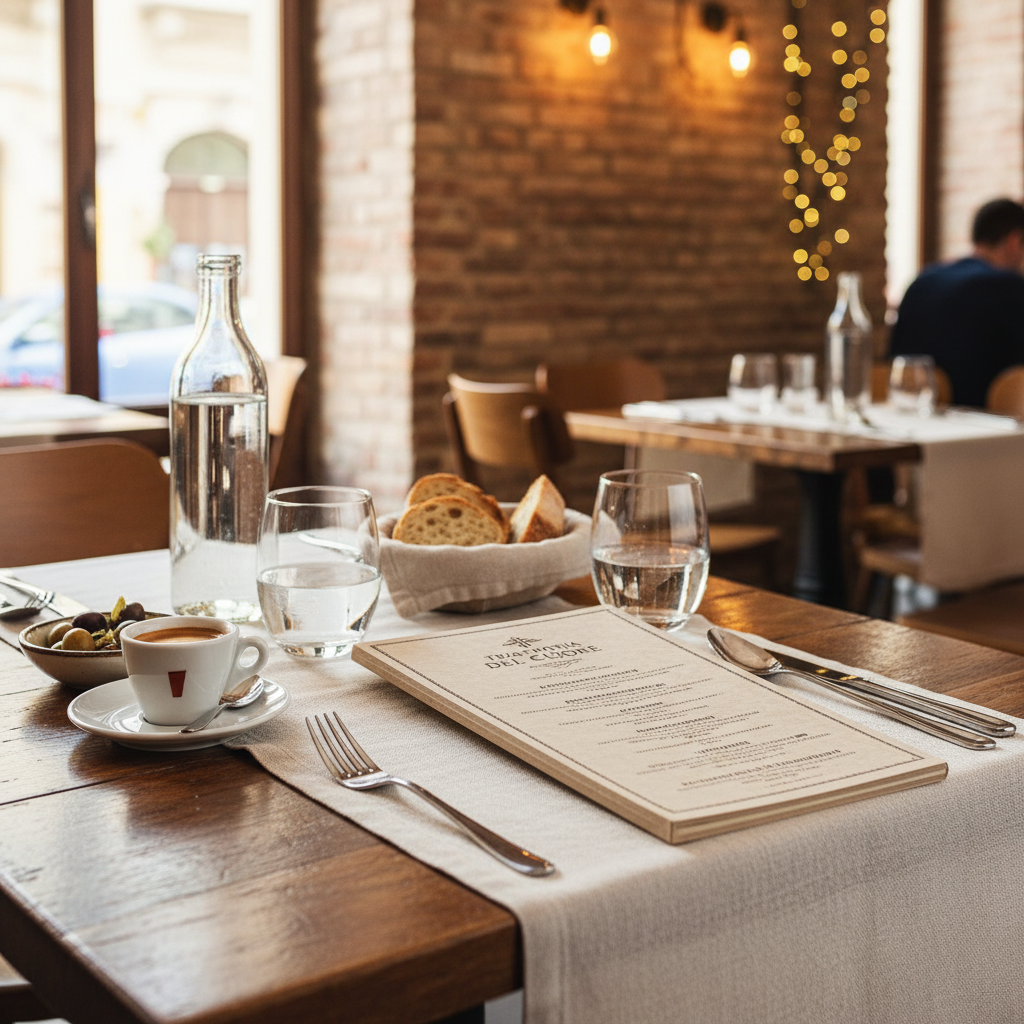
I’ll walk you through the flow of a typical Italian meal, the unspoken expectations, and the phrases that actually help. You’ll also get a quick “what to do in each situation” table, plus a checklist so you can decide how local you want to go without overthinking.
Understand the Italian meal flow (so the menu makes sense)
Before you practice phrases, it helps to understand what Italians think a meal is. Many restaurants structure the menu around courses, and ordering “like a local” often means picking one or two courses, not everything.
- Aperitivo: a pre-dinner drink with snacks, common in cities.
- Antipasto: small starter, often shared.
- Primo: pasta, risotto, soup.
- Secondo: meat or fish main.
- Contorno: side dish, usually ordered separately.
- Dolce: dessert.
- Caffè: usually espresso after the meal.
- Digestivo: after-dinner liqueur, optional.
Two practical tips: ordering a primo + water is totally normal for lunch, and for dinner many people do antipasto + primo or primo + secondo. You don’t have to order multiple courses to be “legit.”
Know the restaurant types and what they expect
What you can “get away with” changes by place. A beach café in August feels different from a small neighborhood trattoria on a Tuesday night.
Quick guide
- Bar: coffee, pastries, sandwiches. You often pay at the cashier first, then show the receipt at the counter.
- Paninoteca / Tavola calda: fast casual, easy ordering, less ceremony.
- Trattoria / Osteria: classic local meal, slower pace, simple dishes.
- Ristorante: more formal, more attentive service, sometimes pricier.
- Pizzeria: pizza-focused; many locals eat pizza for dinner, not lunch.
According to ENIT (Italian National Tourist Board) and many city tourism offices, regional food traditions vary a lot. That’s a polite way of saying you’ll see different rules in different towns, so staying flexible matters more than memorizing one “correct” script.
Read the menu like an Italian (and avoid common traps)
Menus in Italy often assume you know what a dish is. If you don’t, ask. It’s not embarrassing, it’s normal—especially with regional items.
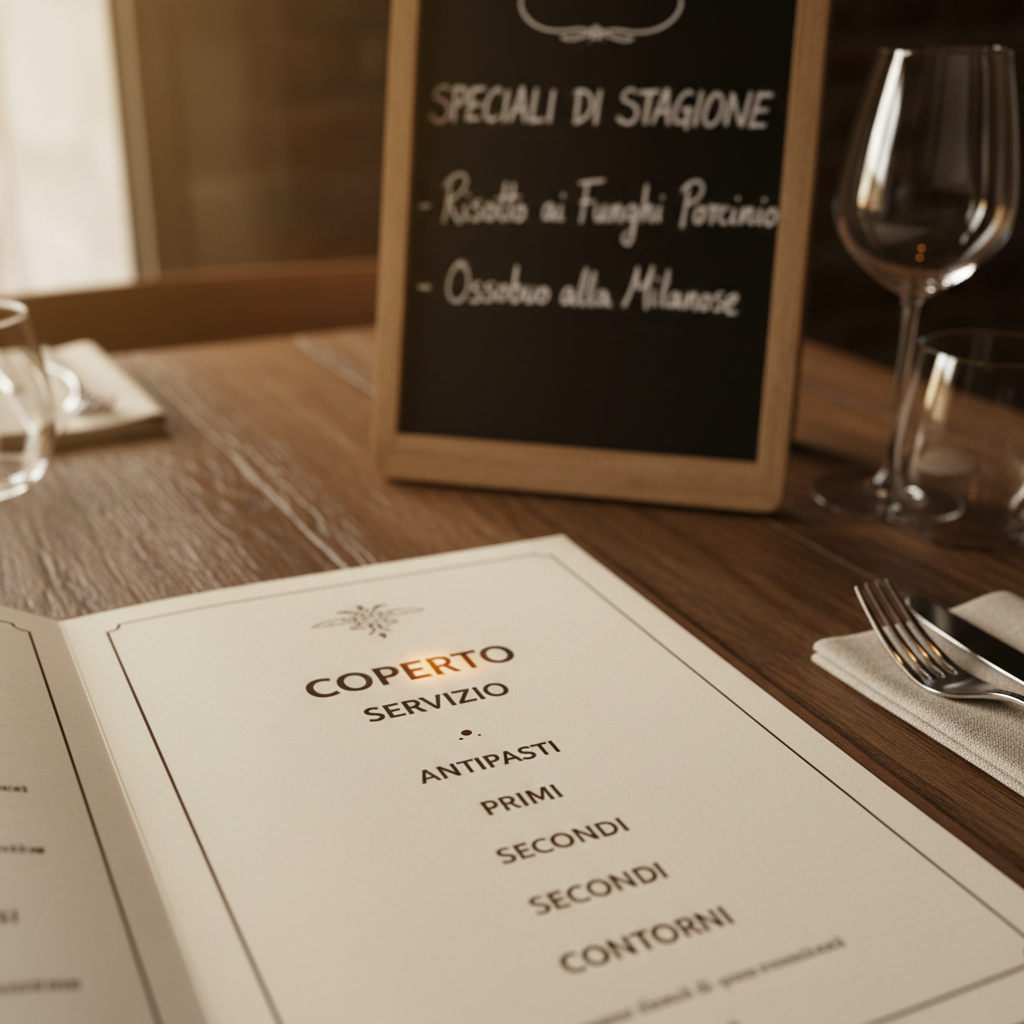
Here are the items that confuse Americans most:
- Coperto: a per-person cover charge (often bread/service). It’s common and usually listed.
- Servizio: service charge. If this is included, tipping becomes more optional.
- Acqua naturale / frizzante: still vs sparkling water. They’ll often ask which you want.
- “Seasonal” or “market price” items: ask the price if it isn’t shown, especially for seafood.
One more: “pepperoni” in Italy usually means bell peppers, not spicy sausage. If you want spicy salami, look for salame piccante or diavola on pizza menus.
What to say: a small set of phrases that actually work
You don’t need perfect Italian. What helps is using a few polite lines at the right moment, with a calm pace. If you want to how to order food in italy like local without sounding rehearsed, keep it simple.
At the start
- “Buonasera, avete un tavolo per due?” (Good evening, do you have a table for two?)
- “Possiamo sederci?” (Can we sit?)
- “Va bene qui?” (Is it okay here?)
Ordering
- “Per me…” (For me…)
- “Prendo…” (I’ll have…)
- “Come antipasto/primo/secondo…” (As a starter/first/second course…)
- “Ci consiglia qualcosa?” (Do you recommend something?)
- “Senza…” (Without…) or “Sono allergico/a a…” (I’m allergic to…)
Helpful questions
- “Che cos’è?” (What is it?)
- “È piccante?” (Is it spicy?)
- “È possibile avere…” (Is it possible to have…)
If you blank, English usually works in tourist areas. In smaller towns, speaking slowly and pointing to the menu gets you surprisingly far.
Local etiquette that changes the whole experience
This is the part people feel but can’t always name. Italian dining tends to be unhurried, and the staff often won’t “check in” constantly. That isn’t bad service, it’s a different rhythm.
- Wait to be seated when there’s a host stand; in casual spots, you can ask and sit.
- Ask for the check: “Il conto, per favore.”
- Don’t expect substitutions the way you might in the U.S.; simple requests usually go better than big custom builds.
- Respect meal times: many kitchens close between lunch and dinner, especially outside big cities.
About coffee: cappuccino is commonly a morning drink. Ordering one after dinner won’t get you “in trouble,” but it can mark you as a visitor. If you want to blend in, go with espresso after a meal.
Practical ordering scenarios (with a quick table)
When you’re hungry and tired, you don’t want a language lesson. This table is meant for real life: you walk in, you need food, you want to act normal.
| Situation | What locals often do | What you can say |
|---|---|---|
| Busy bar for coffee | Order quickly, drink standing at counter | “Un caffè, per favore.” |
| Lunch in a trattoria | One course + water, maybe a coffee | “Prendo un primo e acqua naturale.” |
| Dinner with friends | Share antipasti, then individual mains | “Possiamo prendere antipasti da condividere?” |
| You need a recommendation | Ask what’s best today, especially seasonal | “Cosa mi consiglia oggi?” |
| Paying and leaving | Ask for check, pay at table or register | “Il conto, per favore.” |
If your goal is how to order food in italy like local without stress, focus on timing and confidence more than accent. A calm “prendo…” beats a perfect sentence delivered nervously.
A quick self-checklist before you sit down
Use this when you’re unsure what kind of place you’re in. It prevents the two most common mistakes: walking in with the wrong expectations, and ordering in the wrong “style” for that room.
- Is there a cashier counter? If yes, you may pay first (common in bars).
- Do you see multi-course menus? If yes, ordering by course feels natural.
- Are tables turning quickly? If yes, keep it simple and order efficiently.
- Is it after 2:30 pm? In many areas, lunch service might be ending.
- Are specials spoken, not printed? Ask: “Quali sono i piatti del giorno?”
One more reality check: in very tourist-heavy zones, the “local” experience may be diluted. That’s okay—use the same polite habits and you’ll still eat well.
Common mistakes Americans make (and what to do instead)
Most dining mishaps aren’t cultural disasters, they’re just small misreads. Fixing them is easy once you notice the pattern.
- Waiting forever for the check: in Italy, you usually ask. Say “Il conto, per favore.”
- Over-ordering: antipasto + pasta + steak + sides can be too much. Pick one “main lane.”
- Assuming free tap water: bottled water is common. You can ask if tap is available, but don’t be surprised if it isn’t.
- Trying to rewrite the dish: ask for small adjustments, not a full customization.
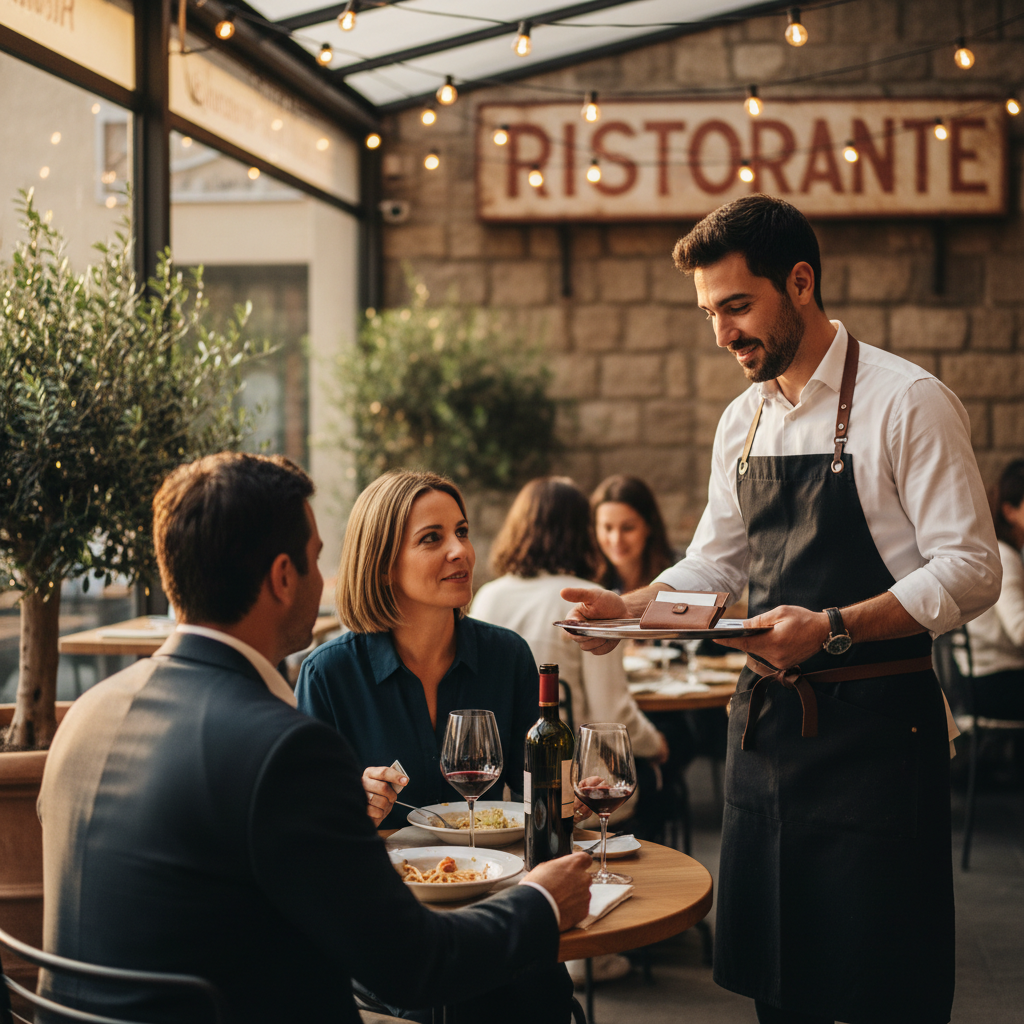
Tipping is the big one. If a servizio charge appears, many travelers leave no extra tip or just round up. If there’s no service charge, a small tip can be appreciated, but it’s usually modest compared to U.S. norms. When in doubt, rounding up is a safe, low-drama move.
Step-by-step: how to order smoothly in Italy (start to finish)
This is the “do this, then that” version. Keep it on your phone and you’ll be fine.
- Walk in and greet: “Buonasera.”
- Ask for a table: “Avete un tavolo per due?”
- Order water early: “Acqua naturale o frizzante?” then answer.
- Pick your course plan: one course is normal, two is plenty for many dinners.
- Order with a clear lead-in: “Per me, prendo…”
- Confirm any must-have details: allergies, spice level, portion questions.
- Enjoy the slower pace: you don’t need to rush the table.
- Ask for the check: “Il conto, per favore.”
If you only remember one thing, remember this: how to order food in italy like local is less about secret words and more about matching the room’s pace, then speaking plainly.
When to ask for extra help (dietary needs and tricky situations)
If you have allergies, celiac disease, or other medical dietary needs, it’s smart to be explicit and repetitive in a calm way. Cross-contact risks vary by kitchen, so it’s reasonable to ask what they can safely do, and to choose simpler dishes when you’re unsure.
According to U.S. Centers for Disease Control and Prevention (CDC), travelers with food allergies should plan ahead and communicate clearly when eating out. If your reactions are severe, consider carrying appropriate medication and speaking with a clinician before travel.
For language help, translation apps work best when you use short, direct sentences and show the screen to staff. If the situation feels uncertain, pick a place with clearer allergen labeling or a simpler menu.
Conclusion: eat well, stay relaxed, and let Italy do the rest
Once you understand the course structure, get comfortable asking for the check, and learn a handful of phrases, the whole experience changes. You stop “performing” and start enjoying, which is the real local move.
Your next step can be simple: save 5 phrases in your notes app, then practice ordering water and one dish without rushing. Do that twice, and the rest of the trip usually feels much easier.