
Travel hat sun protection is one of those small choices that quietly decides whether a day outside feels comfortable or turns into squinting, headaches, and a sunburn you didn’t plan for.
If you’ve ever bought a “cute” packable hat that folded into a suitcase and then showed up as a wrinkled cone that barely covered your face, you already know the problem: travel hats aren’t just about style, they’re about reliable shade, fit that stays put in wind, and materials that don’t feel like a sauna.
This guide breaks down what actually matters when you’re choosing a sun hat for travel, how to match features to your trip, and a quick checklist you can use before you click “add to cart.”

Why a travel sun hat matters more than most people expect
Hats often get treated as accessories, but outdoors they act like portable shade. In many situations, that means less direct sun on your face, ears, and neck, which are common “missed spots” even when you apply sunscreen carefully.
According to the American Academy of Dermatology (AAD), seeking shade and wearing protective clothing are part of a broader sun-safety approach, and hats with a wide brim can help shield areas that sunscreen sometimes misses.
There’s also a comfort angle people forget: a good brim reduces glare when you’re navigating unfamiliar streets, driving, fishing, or hiking. When you’re traveling, saving your eyes and energy is not a small win.
Key features that make (or break) travel hat sun protection
Not every “sun hat” performs the same once you add sweat, wind, salt water, or a long day of walking. Here’s what tends to separate the hats people actually keep from the ones that live at the bottom of a suitcase.
Brim width and shape
- Wide brim (about 3 inches or more) usually gives better coverage for face and ears.
- Downturned brims often block side light better than a flat brim, but can reduce upward visibility on steep trails.
- Neck cape or extended back can be helpful for boating, desert trips, or long hikes, if you don’t mind the look.
UPF fabric vs. “thick enough” fabric
“UPF” is a rating for how much UV radiation a fabric allows through. Many travel hats rely on tightly woven fabrics, which can still work well, but a labeled UPF rating adds clarity when you’re comparing options.
According to the Skin Cancer Foundation, UPF-rated clothing can help reduce UV exposure as part of a sun-protection routine. A hat isn’t a force field, but predictable fabric performance is helpful when you’re outdoors for hours.
Ventilation and sweat management
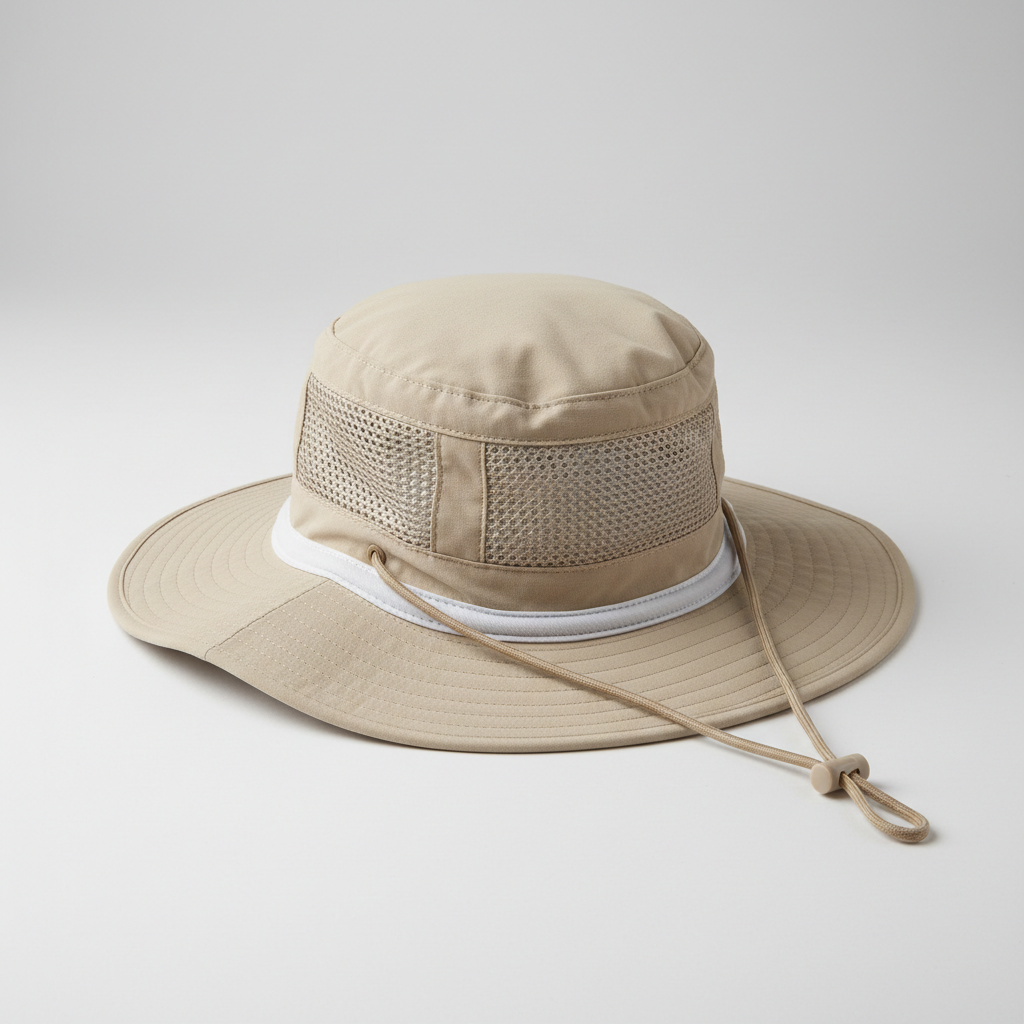
- Mesh panels can increase airflow, but check that the mesh is still protective enough for your use.
- Moisture-wicking sweatband helps with comfort and reduces sweat dripping into eyes.
- Darker under-brim can cut glare, which feels great on water, sand, and snow.
Packability without losing structure
Packable should not mean “collapses forever.” If you plan to stuff it in a daypack, look for brims that spring back, and crowns that don’t crease into a permanent ridge.
Fit, adjusters, and wind security
If you only remember one thing, make it this: travel hat sun protection fails fast when your hat won’t stay on your head.
- Internal size adjuster helps fine-tune fit, especially if you’re between sizes.
- Chin cord (removable is ideal) matters for beaches, boat decks, viewpoints, and open-air tours.
- Ponytail opening can be a real quality-of-life feature if you wear your hair up.
Quick self-check: what kind of trip are you buying for?
People get stuck because they shop for a “best” hat instead of the right hat for the trip. Use this to narrow fast.
- City travel and museums: lighter brim, packable, style-friendly, easy to take on/off.
- Beach and pool days: wide brim, chin strap, quick-dry materials, darker under-brim helps with glare.
- Hiking and national parks: secure fit, ventilation, sweatband, packable but resilient brim.
- Boating and fishing: wind security is priority, glare reduction, water-resistant materials.
- High altitude or desert: maximum coverage, UPF labeling, neck protection often worth it.
If your answer is “all of the above,” you may want two hats: a nicer packable hat for town, and a more technical option for long outdoor days.
How to choose the right travel hat (step-by-step)
This is the practical method that avoids regret purchases.
Step 1: Decide your coverage target
- Face-only comfort: medium brim can work, especially in cities.
- Face + ears priority: aim for a wider brim and stable shape.
- Face + ears + neck: consider a wide brim plus cape, or a legionnaire-style design.
Step 2: Match material to heat and humidity
- Hot and humid: look for breathable weaves, mesh ventilation, and wicking sweatbands.
- Dry heat: coverage matters most; airflow still helps, but don’t sacrifice brim stability.
- Shoulder season: packability and comfort may outrank maximum ventilation.
Step 3: Confirm fit before you commit
Measure your head circumference if you can, then check sizing charts. Many returns happen because a brim looks great online but the crown sits too high, or the hat squeezes and becomes annoying after 30 minutes.
Step 4: Add “wind insurance”
Even in cities, wind tunnels happen. A discreet chin cord or a secure internal adjuster can be the difference between enjoying a viewpoint and chasing your hat across the street.
Comparison table: common travel hat types and what they’re good at
Use this as a shortcut when you’re weighing trade-offs. The “best” choice depends on where you’ll wear it most.
| Hat type | Pros | Trade-offs | Best for |
|---|---|---|---|
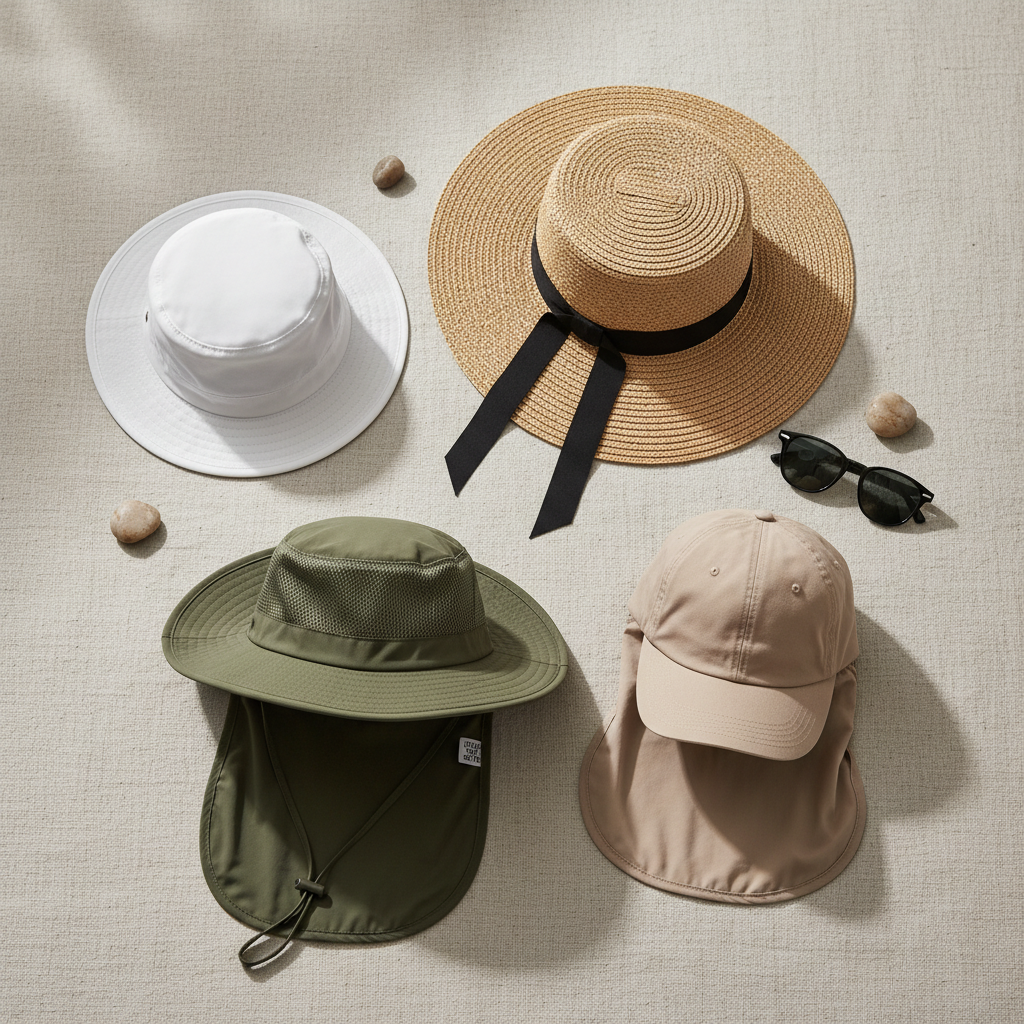
| Packable wide-brim | Good shade, travel-friendly | Some lose shape over time | Beach trips, walking-heavy travel |
| Straw-style (structured) | Classic look, sturdy brim | Bulkier, can crack if crushed | Resorts, city + outdoor mix |
| Technical hiking sun hat | Ventilation, sweat control, often UPF | Less “dressy” | Hikes, parks, hot climates |
| Bucket hat (UPF) | Compact, casual, easy packing | Coverage varies, ear/neck shade may be limited | City travel, short outdoor blocks |
| Cap + neck flap | Great neck protection, stable in wind | More utilitarian look | Desert, high sun exposure days |
How to actually use a sun hat while traveling (so it pays off)
Travel hat sun protection works best when you treat it as one piece of a system, not a substitute for everything else.
Pair it with sunscreen in the “missed zones”
- Apply sunscreen to ears, hairline, and neck, even with a wide brim.
- Reapply after swimming or heavy sweat, following the product label. If you have skin sensitivities or a history of skin issues, it’s reasonable to ask a dermatologist what to use.
Adjust for the sun angle, not just the forecast
Midday sun is obvious, but morning and late afternoon can hit from the side, which is when a floppy brim that curls upward becomes annoying. If your brim won’t hold shape, that’s a signal to switch styles.
Pack it like you want to wear it
- If it’s crushable, stuff the crown with socks to help it keep form.
- If it’s structured, clip it to a backpack or carry it; forcing it into a suitcase usually ends in dents.
- After rain, let it dry fully before packing to avoid odor and fabric breakdown.
Common mistakes (and what to do instead)
- Mistake: buying based on brim width alone.
Do instead: check stability, fit adjusters, and whether the brim holds shape in wind. - Mistake: assuming any woven hat blocks enough UV.
Do instead: look for UPF labeling when you want clarity, especially for long exposure days. - Mistake: wearing a hat that feels “fine” for 10 minutes.
Do instead: wear it around the house for an hour; pressure points show up late. - Mistake: skipping sunglasses because you have a brim.
Do instead: use both; glare can still come from water, sand, or pavement.
When it’s worth getting more specialized help
If you burn easily, have a history of skin cancer, take medications that increase sun sensitivity, or you’re planning high-UV travel (high altitude, long beach days, boat trips), it’s smart to discuss sun protection with a clinician. A hat helps, but personalized guidance can reduce risk in ways gear alone can’t.
Also, if headaches, dizziness, or heat illness symptoms show up during hot-weather travel, don’t try to “tough it out.” Seek medical advice promptly, and consider adjusting your sun plan, hydration, and schedule.
Key takeaways before you buy
- Coverage is only useful if the hat stays on your head, prioritize fit and wind security.
- For longer outdoor days, UPF-labeled fabric and a stable wide brim simplify decisions.
- Packability should mean “springs back,” not “permanently creased.”
- Use your hat with sunscreen and sunglasses for a more complete approach.
Conclusion: a good travel sun hat is a comfort tool, not just an accessory
When you pick a hat that matches your trip, travel hat sun protection stops being a vague idea and becomes something you feel all day: less glare, fewer missed-burn spots, and more willingness to stay outside longer. If you want one simple action, measure your head, choose a brim that fits your main activity, and make sure there’s a real adjuster or chin cord before you travel.
If you’re building a small travel kit, start with one reliable wide-brim option for outdoor days, then add a more compact city-friendly hat if you find yourself leaving the big one behind.
FAQ
What brim size is good for travel hat sun protection?
Many people find a brim around 3 inches or wider gives noticeable face-and-ear coverage, but wind and comfort matter too. If a brim is wide but floppy, it may not shade well when the breeze picks up.
Is UPF necessary in a travel sun hat?
Not always, tightly woven fabrics can perform well, but UPF labeling makes comparison easier when you expect long exposure. If you’re traveling to high sun areas, UPF can be a helpful filter while shopping.
Are bucket hats enough for long days outside?
Sometimes, especially if the bucket hat has a decent brim and UPF fabric, but coverage for ears and neck varies a lot by design. For beaches, hiking, or boating, many travelers prefer a wider brim or added neck coverage.
How do I keep a packable hat from getting misshapen?
Stuff the crown lightly with soft items, avoid hard folds, and let it dry completely before packing. If the brim has a wire edge or structured stitching, it usually rebounds better after travel.
Do I still need sunscreen if I wear a sun hat?
Yes in most cases. Brims reduce direct exposure but don’t fully block reflected UV from water, sand, and pavement, and they rarely cover the entire neck and jawline.
What features matter most for windy destinations?
A secure internal adjuster and a chin cord tend to matter more than extra brim width. A slightly smaller brim that stays put often protects better than a larger brim that flips up or blows away.
What color is best for a travel hat in hot weather?
Lighter colors can feel cooler in direct sun, while a darker under-brim can reduce glare. Many hats balance both by using a light exterior with a darker underside.
Can a travel hat help prevent heat issues?
It may help with comfort by providing shade, but it’s not a standalone solution. If you’re prone to heat illness or have health concerns, consider discussing hot-weather precautions with a medical professional.
If you’re trying to choose a travel hat that won’t end up unused, focus on your most common outdoor scenario, then shop for stability and fit before style details, that’s usually the difference between a hat you pack “just in case” and one you actually reach for.