
best portable charger for travel 2026 usually comes down to one thing: matching your devices and trip style to the right size, speed, and port mix so you stop playing battery roulette in airports and rideshares.
If you travel even a few times a year, a power bank stops being a nice-to-have and turns into your backup plan for maps, boarding passes, hotel check-ins, and that one friend who “forgot” their cable. The tricky part is that the “best” option is rarely the biggest battery or the cheapest brick, it’s the one that fits your real usage without getting you flagged at security or slowing you down with bulky weight.

This guide focuses on what actually matters in 2026 shopping pages: USB-C power delivery, airline-friendly capacity, pass-through quirks, and the “hidden” specs that decide whether your phone hits 50% in 20 minutes or crawls all afternoon.
What “best” means for travel in 2026 (not at your desk)
Travel changes the math. You’re not topping off next to a wall outlet, you’re trying to survive long stretches between plugs, sometimes with only 20 minutes to charge before boarding.
- Portability: pocketable or at least bag-friendly, especially on city days.
- Fast charging that matches your devices: USB-C PD for phones/tablets, and enough wattage to matter.
- Right capacity: enough recharges without crossing practical weight limits.
- Airport compatibility: staying within airline guidelines and being ready to show specs if asked.
- Reliability: stable output, good heat management, and a brand that publishes real specs.
According to the Federal Aviation Administration (FAA), spare lithium batteries and power banks generally must be carried in carry-on baggage, and airlines commonly restrict power banks above certain watt-hour limits, so checking your carrier’s policy before flying is a low-effort win.
Quick spec cheat sheet: capacity, watts, and ports
Most confusion comes from mixing capacity marketing with charging speed. Here’s the translation that helps you shop faster.
Capacity (mAh) vs real usable energy
10,000mAh is typically the “day trip sweet spot.” 20,000mAh often works better for long flights, shared charging, or tablets, but you pay in weight and bulk. Real usable capacity is usually lower than the label because of voltage conversion and heat, so it’s smart to leave a buffer.
Charging speed (W) that you’ll actually notice
- 20–30W USB-C PD: great for most phones, good travel baseline.
- 45–65W USB-C PD: helpful for larger phones, tablets, and some ultralights.
- 100W+: niche for laptop-heavy travel, often larger and pricier.
Ports: fewer, stronger usually beats many, weak
A common travel setup is 1–2 USB-C ports + 1 USB-A. USB-A still helps with older cables and hotel accessories, but USB-C should do the “fast” work.
Travel scenarios and the portable charger that fits
Instead of chasing one universal pick, match your power bank to your trip pattern. Most buyers get better results with this approach than with “highest mAh” filters.
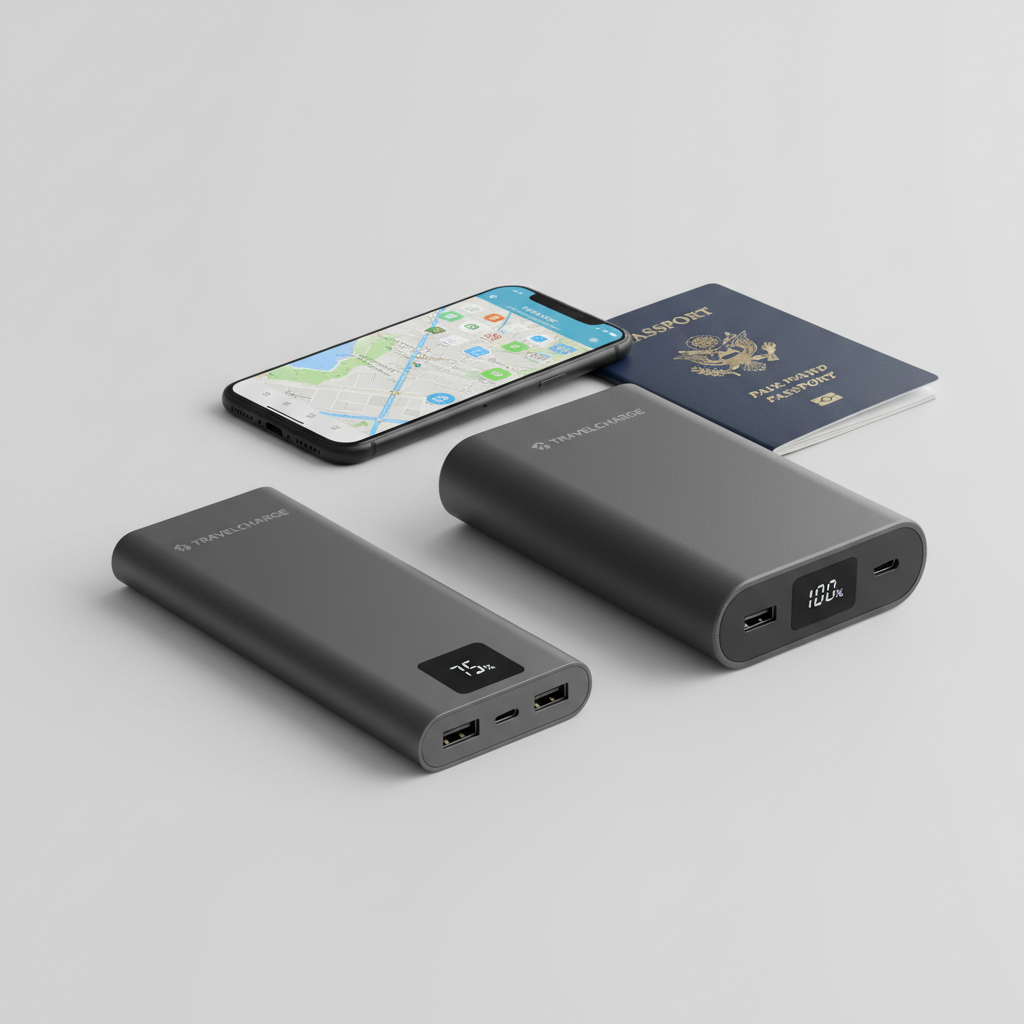
1) Weekend city trip (phone only)
- Recommended: 10,000mAh, 20–30W USB-C PD, slim form factor
- Why: easy to carry all day, enough for 1–2 phone recharges
- Watch for: “fast” claims without PD support
2) International travel day (phone + earbuds + occasional hotspot)
- Recommended: 15,000–20,000mAh, 30–45W USB-C PD, 2+ ports
- Why: airport + flight + arrival day can be a long stretch
- Watch for: heavy bricks that make your day bag annoying
3) Work travel (phone + tablet, sometimes laptop top-ups)
- Recommended: 20,000mAh with 45–65W USB-C PD output
- Why: stable power for tablets, and meaningful laptop boosts in a pinch
- Watch for: units that advertise “65W” but only on one port, not when sharing
4) Family travel (multiple phones)
- Recommended: 20,000mAh, multi-port with clear total output specs
- Why: fewer arguments, more predictable charging rotation
- Watch for: too many ports with low combined wattage
Comparison table: what to buy based on your gear
If you want a quick decision, use this table as a shopping target. It’s not brand-specific, it’s spec-specific, which is usually more honest for 2026 listings.
| Traveler type | Capacity target | USB-C output target | Ports | Best for |
|---|---|---|---|---|
| Light packer | 10,000mAh | 20–30W PD | 1C + 1A | Phone, earbuds |
| Long travel day | 15,000–20,000mAh | 30–45W PD | 2C or 1C + 2A | Phone + accessories |
| Tablet user | 20,000mAh | 45W PD | 2C preferred | Tablet + phone |
| Carry-on office | 20,000mAh | 65W PD | 2C + 1A | Light laptop top-ups |
| Shared charging | 20,000mAh | 30–45W PD | 3 ports | 2–3 phones |
Buying checklist: how to tell a “good listing” from a sketchy one
This is where many people get burned, especially when searching for the best portable charger for travel 2026 and clicking the first marketplace deal.
- Clear PD/QC language: look for “USB-C Power Delivery (PD)” and actual watt numbers.
- Input speed matters: a big power bank that recharges slowly becomes a hotel-night bottleneck.
- Total vs per-port output: check whether 45W is shared across ports or dedicated.
- Cable strategy: built-in cable is convenient, but can be a single point of failure.
- Battery indicator: percentage display beats 4-dot guessing when you’re boarding.
- Weight and thickness: if it’s “fine” in your hand at home, it may feel bad after 8 hours out.
According to the U.S. Consumer Product Safety Commission (CPSC), lithium-ion battery products can pose fire risks if damaged, poorly made, or misused, so avoid no-name options with missing specs and consider sticking to brands that publish safety certifications and support.
Practical travel tips: make the charger work better (no extra gear required)
A solid power bank can still disappoint if the setup is wrong. A few small adjustments usually fix the real-world issues people complain about.
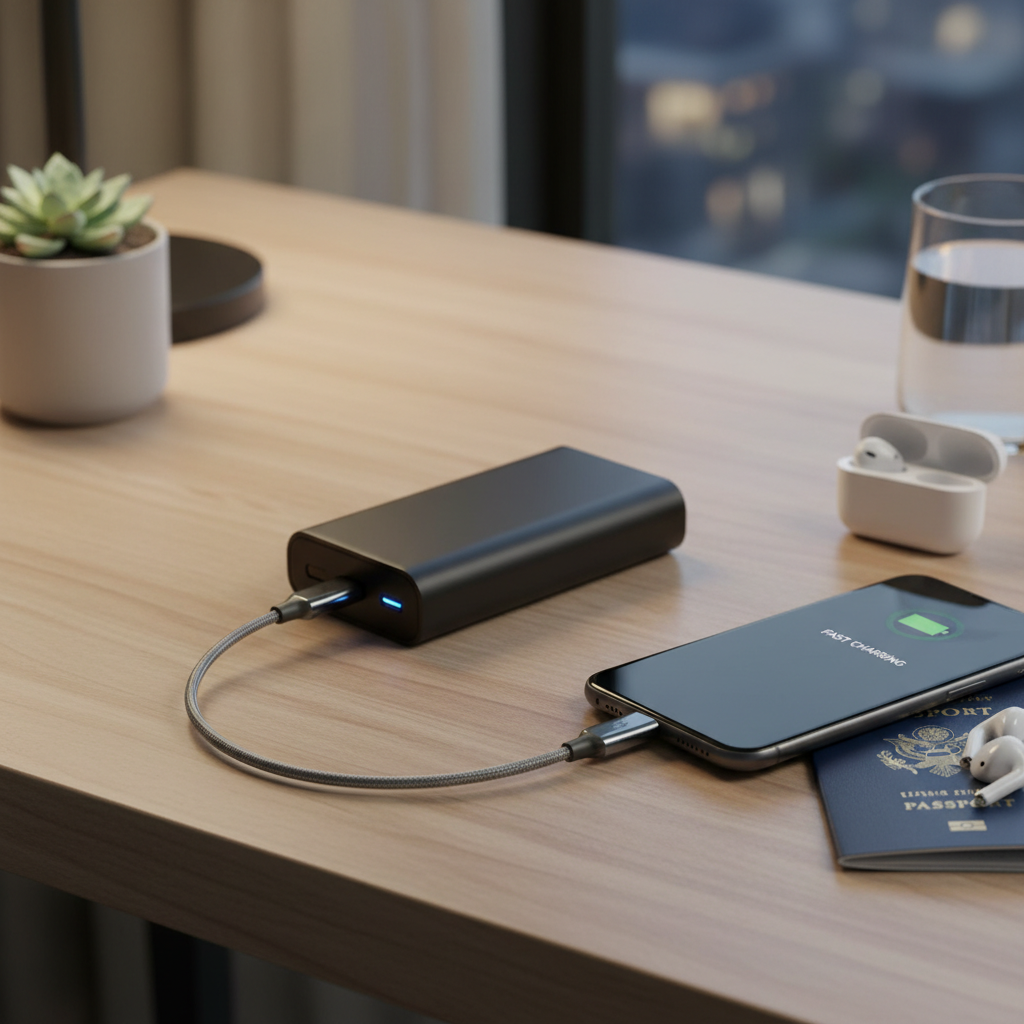
- Use the right cable: a cheap cable can throttle fast charging even if the power bank is capable.
- Charge early, not at 2%: many phones ramp speed down near full, but also behave differently when nearly dead; you’ll get steadier results topping up sooner.
- Keep it cool: heat reduces performance; don’t sandwich the bank under blankets on a plane.
- One device at a time when you need speed: sharing ports often drops wattage per device.
- Pre-charge the bank before leaving: obvious, but still the #1 reason a “new” power bank feels useless on day one.
Common mistakes (and why they keep happening)
Most regret purchases follow a predictable pattern, and it’s not usually about brand loyalty, it’s about mismatched expectations.
- Buying capacity without speed: 20,000mAh sounds great until it charges your phone slowly for hours.
- Assuming “laptop compatible” means laptop-ready: your laptop may require higher wattage than the bank can sustain.
- Ignoring airline guidance: if the labeling is unclear, you may be asked questions at screening, and that’s stress you don’t need.
- Falling for “wireless-only” convenience: wireless charging helps in a pinch, but it’s often less efficient and can run hot, wired remains more predictable.
- Overpacking power: carrying a heavy brick daily for a 10-minute emergency is a classic overcorrection.
Conclusion: a simple way to pick your 2026 travel power bank
If you want the best portable charger for travel 2026 without overthinking it, choose by scenario: 10,000mAh + 20–30W PD for most weekend trips, and 20,000mAh + 30–65W PD when you add tablets, long-haul days, or shared charging.
Your next step is straightforward: open your device list, decide how many charges you realistically need between outlets, then shop for USB-C PD wattage and airline-friendly labeling before you worry about extras like built-in cables or wireless pads.
FAQ
What capacity is best for a portable charger for travel in 2026?
For most travelers, 10,000mAh covers a day out with a phone and small accessories, while 20,000mAh fits longer travel days or multiple devices. If you hate carrying weight, you’ll usually be happier with a smaller bank plus a short charging habit.
Is 20W or 30W better for fast charging while traveling?
30W is often the more flexible travel choice, especially for larger phones and quick top-ups, but the “better” pick depends on what your phone can accept. A 30W bank won’t force 30W into a device that tops out lower.
Can I bring a portable charger on a plane?
Many airlines allow power banks in carry-on luggage, but restrictions vary, and staff may look for clear watt-hour labeling. According to the FAA, spare lithium batteries and power banks generally belong in carry-on, not checked bags, so review your airline rules before you fly.
Why does my power bank say fast charge but feels slow?
Usually it’s the cable, the port you used, or the bank lacking USB-C PD despite “fast” marketing. Also, charging speed drops when the phone gets warm or approaches higher battery percentages.
Should I get a power bank with built-in cables?
It’s convenient for light travel, but it can be limiting if the cable wears out or you switch devices. Many frequent travelers prefer a separate short, durable USB-C cable and treat built-in cables as a bonus, not the core feature.
Is wireless charging on a travel power bank worth it?
Wireless can be handy in a seatback situation where cables snag, but it’s often less efficient and may run warmer. If you care about speed and predictable results, wired output still tends to win.
What wattage do I need to charge a laptop with a portable charger?
Many ultralight laptops can charge at 45–65W USB-C PD, but some need more, and some banks only provide peak wattage under specific conditions. Checking your laptop’s charger watt rating is a practical starting point, and if you’re unsure, asking the manufacturer or a qualified technician is sensible.
If you’re shopping and want a more “no-surprises” path, make a short list of your devices and the ports you need, then compare only models that clearly state USB-C PD wattage, input speed, and airline-friendly labeling, it narrows the field fast and saves you from spec guesswork.