
Travel first aid kit contents matter most when you’re tired, far from a store, or dealing with a small problem that can turn into a trip-ruiner. The goal is simple, handle the common stuff fast, and know when it’s no longer “common stuff.”
Most people either pack too little, a couple of random bandages, or pack a mini-pharmacy that gets messy, leaks, or triggers airport questions. A good kit sits in the middle, compact, labeled, and built around how you actually travel.
This guide gives you a full contents list, a quick self-check, and a few add-ons for beaches, hiking, families, and international trips. I’ll also point out common mistakes, like bringing meds you can’t identify later, or skipping the boring items that save you time.
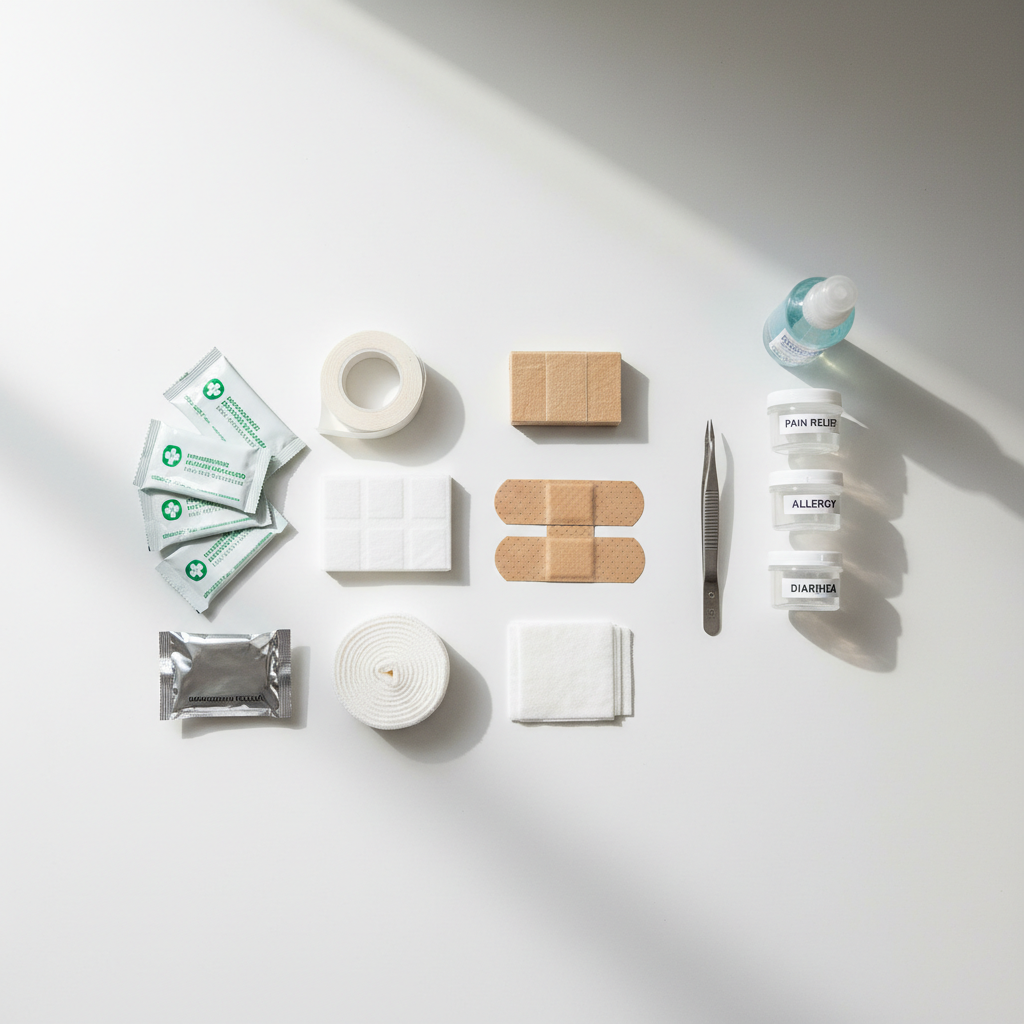
What to pack, and why this list stays realistic
A travel kit works when it matches your risk level and access to care. A weekend in Chicago looks different from a rural road trip, and both differ from a trek where you won’t see a pharmacy for days.
Two guardrails help, pack for minor issues you can safely manage, and pack to buy time until you can get proper help for anything more serious. According to the CDC, travelers should plan for routine health needs and consider destination-specific risks, which usually translates into a core kit plus a few tailored add-ons.
Full travel first aid kit contents list (core essentials)
If you want one baseline set of travel first aid kit contents that fits most U.S. trips, start here. Quantities are suggestions for 1–2 people over about a week, scale up for longer trips or larger groups.
Wound care and bleeding control
- Adhesive bandages (assorted sizes), 10–20
- Gauze pads (sterile, 2x2 or 3x3), 6–10
- Rolled gauze (or cohesive wrap), 1 roll
- Medical tape (1/2–1 inch), 1 roll
- Antiseptic wipes (single-use), 10–20
- Saline wound wash (small bottle) or sterile saline pods, optional but handy
- Antibiotic ointment packets or small tube, 1
- Hydrocortisone 1% (itch/rash), small tube
Blisters and foot problems
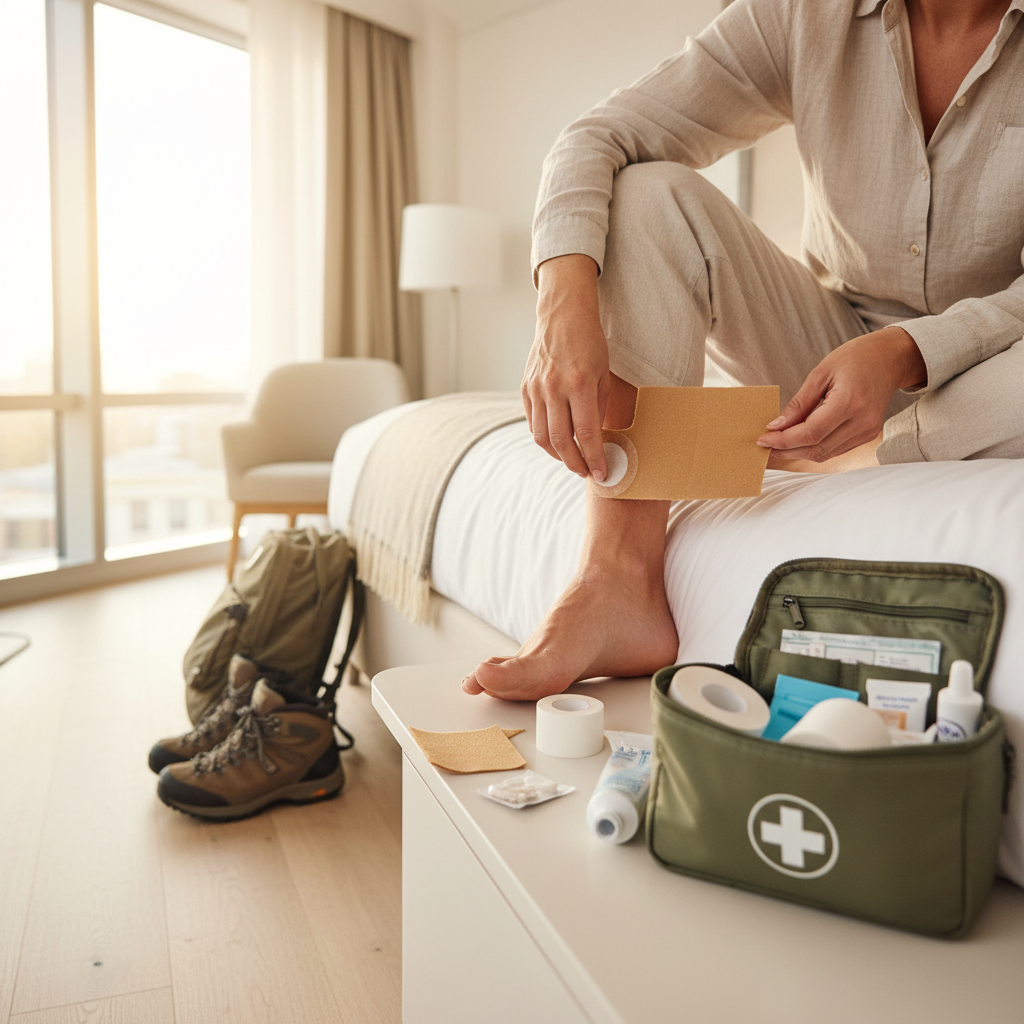
- Blister pads (hydrocolloid), 4–8
- Moleskin or blister tape, 1 small sheet/roll
- Alcohol prep pads (also useful for cleaning tools), a few
Pain, fever, and common meds
- Acetaminophen (pain/fever) or ibuprofen (pain/inflammation), travel-size
- Antihistamine (allergies/itching), e.g., cetirizine or diphenhydramine
- Anti-diarrheal (loperamide), small pack
- Oral rehydration salts or electrolyte packets, 2–6
- Antacid chewables, small pack
- Motion sickness option if you need it, meclizine or non-med options
Medication choices can be personal and situation-dependent, and if you have medical conditions, it’s worth asking a clinician what to carry and what to avoid.
Tools and basic supplies
- Nitrile gloves, 2–4 pairs
- Tweezers (splinters, ticks), 1
- Small scissors (TSA-compliant if flying), 1
- Thermometer (compact digital), 1
- Safety pins, a few
- Hand sanitizer (small), 1
- Instant cold pack, 1 (optional, bulky but useful)
Skin and sun basics (often forgotten)
- Sunscreen (travel size)
- Aloe or burn gel (small), optional
- Insect bite relief (after-bite style) or extra hydrocortisone
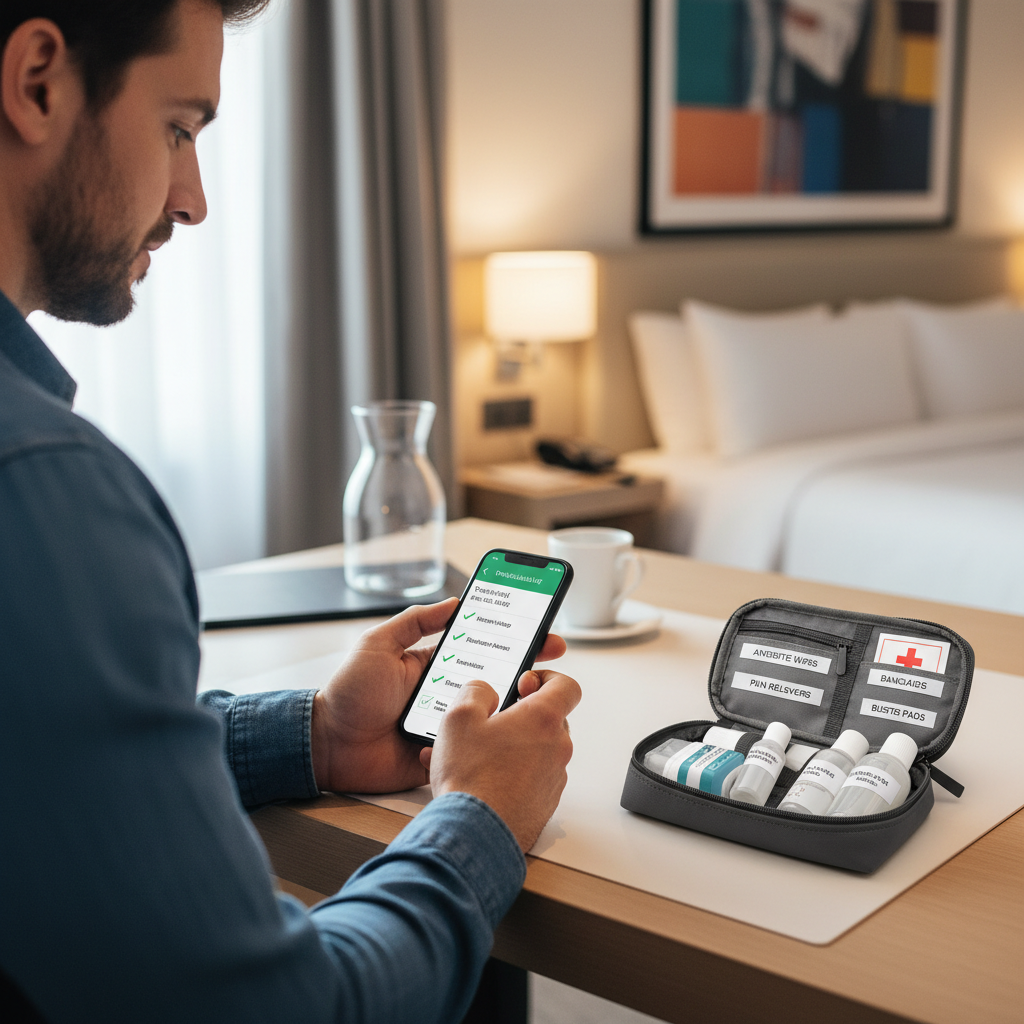
Quick self-check: what kind of traveler are you?
Before you finalize your travel first aid kit contents, run this quick check. If you answer “yes” to more than two, you likely need a slightly beefier kit or a few add-ons.
- You’ll be 30+ minutes from a pharmacy for much of the trip
- You’re traveling with kids or an older adult
- You get blisters easily, or you’re planning lots of walking
- You have allergies, asthma, migraines, or other recurring issues
- You’ll be in heat, humidity, altitude, or remote areas
- You’re crossing borders where familiar brands may be harder to find
This is also where prescriptions live, not “maybe,” but the meds you actually take, packed in original labeled containers when possible.
Scenario add-ons (pack only if they match your trip)
Most kits fail because they try to cover every scenario. Better approach, keep a solid core list, then add a small module per trip type.
Hiking, camping, and national parks
- Elastic wrap bandage (ankle/wrist support)
- Extra blister care (more hydrocolloid pads)
- Tick removal tool (or rely on quality tweezers)
- Water purification backup if you’re remote (not first aid, but prevents problems)
Beach and sun-heavy trips
- Extra sunscreen and lip balm with SPF
- Swimmer’s ear drops if you’re prone to ear issues
- Chafing balm (thighs, straps, wet suits)
International travel
- Printed medication list with generic names, doses, and allergies
- Extra days of key meds in case of delays
- Mask options for crowded transit if you prefer them
According to the U.S. Department of Transportation, hazardous materials restrictions can apply in transit, and airline/TSA rules vary, so check current guidance if you carry specialty items, sharp tools, or large liquids.
Pack it so you can actually use it (not just carry it)
Here’s the part people skip, organization. A kit that’s hard to open or impossible to inventory becomes dead weight.
- Use a clear, zip pouch or a small organizer with compartments
- Label mini pill bags with drug name and dose, avoid mystery tablets
- Keep liquids double-bagged so ointments don’t leak onto gauze
- Put the high-frequency items on top, bandages, wipes, blister pads
- Add a one-page card with allergies, emergency contacts, and insurance details
If you fly, it usually helps to keep meds together and easy to inspect. For prescriptions, original containers reduce friction at security or border checks in many situations.
Common mistakes that quietly make your kit useless
- Expired or heat-damaged meds, a kit that lives in a hot car all summer may not be reliable
- No gloves, you don’t want to improvise hygiene when someone is bleeding
- Only tiny bandages, you need gauze for scrapes and larger areas
- Skipping blister prevention, blisters are “minor” but can wreck your itinerary
- Overdoing specialty items, if you don’t know how to use it safely, it’s often better left out
Also, be careful with combination cold/flu meds when traveling, doubling up ingredients like acetaminophen can happen fast if you’re not paying attention.
When to stop self-treating and get medical help
A travel kit is for small, stable issues. If something feels “off,” it’s okay to get help early rather than trying to tough it out in a hotel room.
- Bleeding that won’t stop after firm pressure, or deep wounds that may need stitches
- Signs of infection, worsening redness, warmth, swelling, pus, or fever
- Severe allergic symptoms, facial swelling, trouble breathing, widespread hives
- Head injury with confusion, repeated vomiting, fainting, or worsening headache
- Dehydration that doesn’t improve, especially in kids or older adults
According to the American Red Cross, first aid focuses on immediate care and knowing when to seek advanced help, and that mindset fits travel well. If you’re unsure, local urgent care, a pharmacy clinic, or telehealth may be a reasonable next step, depending on severity and location.
Printable-style checklist table (core kit)
If you want a fast way to build or restock your travel first aid kit contents, use this as your shopping and packing checklist.
| Category | Item | Suggested qty |
|---|---|---|
| Wound care | Adhesive bandages (assorted) | 10–20 |
| Wound care | Sterile gauze pads | 6–10 |
| Wound care | Antiseptic wipes | 10–20 |
| Blisters | Hydrocolloid blister pads | 4–8 |
| Medications | Pain/fever reducer (acetaminophen or ibuprofen) | Travel size |
| Medications | Antihistamine | Travel size |
| GI support | Anti-diarrheal + electrolytes | Small pack + 2–6 |
| Tools | Tweezers + small scissors | 1 each |
| Hygiene | Nitrile gloves + hand sanitizer | 2–4 pairs + 1 |
Key takeaways (so you don’t overthink it)
- A strong kit covers cuts, blisters, allergies, stomach issues, and pain without turning into a suitcase
- Organization is part of the kit, labels, small bags, and quick access matter
- Add-ons should match the trip, remote outdoors and international travel usually need a little more planning
- Know the red flags, a kit buys time, it doesn’t replace medical care
Conclusion: build once, then restock before each trip
The easiest way to keep travel first aid kit contents under control is to build a solid core kit once, then do a five-minute restock check before you leave. You’ll travel lighter, and you’ll waste less time hunting for basics when you should be enjoying the trip.
If you take one action today, open a pouch, add blister care and antiseptic wipes, then label your meds so you can identify them under stress.
FAQ
What are the most important travel first aid kit contents for a short weekend trip?
Bandages, antiseptic wipes, blister pads, a pain/fever reducer, and an antihistamine cover most quick problems. Add any prescriptions you can’t miss, even for a two-night stay.
Can I bring a first aid kit on a plane in the U.S.?
Often yes, but sharp tools and liquids can create issues depending on size and the specific item. Check current TSA guidance, and keep medications clearly labeled to reduce delays.
How do I pack medications safely without carrying full bottles?
For non-prescription meds, many travelers use small labeled containers, name, dose, and expiration info matter. For prescriptions, original containers are usually the least complicated option, especially for international travel.
Should I pack antibiotic ointment or just use antiseptic wipes?
Many people carry both because they do different jobs, wipes help clean, ointment can help protect small cuts afterward. If you have sensitivities, choose fragrance-free options and patch-test at home.
What should I add for kids?
Kid-appropriate doses of fever/pain medicine, extra bandages, oral rehydration packets, and a thermometer tend to be practical. If your child has allergies or asthma, ask a pediatric clinician what to carry for your specific situation.
How often should I replace items in my kit?
Check it before each trip, and do a deeper review a couple times a year. Heat and time can degrade adhesives and some medications, so rotate stock instead of leaving the kit in a car trunk long-term.
What if I have a chronic condition?
Your baseline kit should be built around your condition first, then you add general travel items. A clinician or pharmacist can help you decide what rescue meds or documentation to bring, especially if you cross borders.
If you’re building your kit for a specific itinerary, like a national parks loop, a cruise, or an overseas trip, it can help to share your destination, trip length, and who you’re traveling with, then tailor the list so you pack less junk and more of what you’d actually use.