
how to apply sunscreen for long travel days comes down to two things people usually miss: using enough product up front, then reapplying in a way that fits real travel messiness.
Airports, road trips, theme parks, beach days, even a long walkable city itinerary all have the same problem, you’re outside more than you think, you’re sweating, wiping your face, and you don’t want a sticky reapply that ruins makeup or feels gross on a plane.
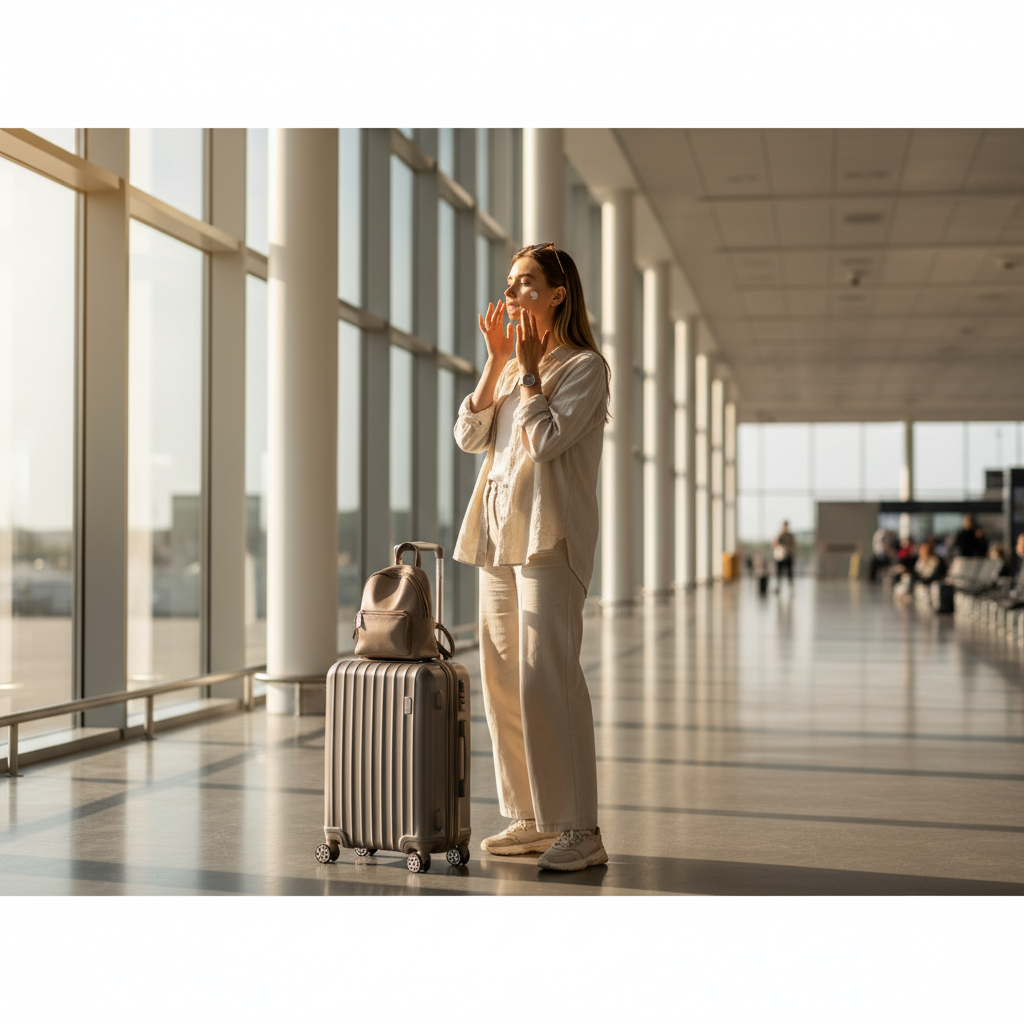
This guide focuses on practical moves, where most people go wrong, how to choose a travel-friendly formula, how to reapply without a sink, and how to cover easy-to-miss zones like ears, hands, and hairline.
Why long travel days break your sunscreen routine
Travel changes your environment and your habits, that combo is why “I put it on this morning” rarely holds up until dinner.
- UV exposure sneaks in, car windows and plane windows still let in some UV, and you often end up walking more outside than planned.
- Time gaps get huge, you apply at 7 a.m., then it’s suddenly 2 p.m. and you never stopped long enough to reapply.
- Friction and sweat, hats, masks, wiping with tissues, neck pillows, and sweating reduce how evenly sunscreen sits on skin.
- New conditions, higher elevation, tropical humidity, or reflective surfaces (water, sand, snow) can raise risk.
According to the American Academy of Dermatology, most adults need about one ounce to cover the body, and sunscreen should be reapplied about every two hours, and after swimming or sweating. That’s the standard, but the trick is making it doable when you’re in transit.
Pick the right sunscreen for travel: what actually matters
For long days, the best sunscreen is the one you’ll reapply, so prioritize comfort and convenience over chasing a “perfect” texture you won’t use.
Use this quick selection checklist
- Broad spectrum (covers UVA and UVB).
- SPF 30 or higher for most people and most trips, higher can make sense for intense sun or very fair skin.
- Water-resistant if you expect sweat, humidity, beach, or sports, check 40 or 80 minutes on the label.
- Format you will carry: small lotion, stick for edges, or a spray for body touch-ups when appropriate.
- Sensitive-skin friendly if you react easily, mineral filters (zinc oxide/titanium dioxide) often feel gentler, though experiences vary.
One nuance people discover mid-trip: “elegant” face sunscreens sometimes underperform on long sweaty walks, while heavier sport formulas can feel too greasy for flights. Many travelers solve this by bringing a comfortable face formula plus a tougher body option.
How to apply enough sunscreen (without guessing)
If you only change one thing, change the amount. Under-applying is the most common failure point, especially on face and neck.
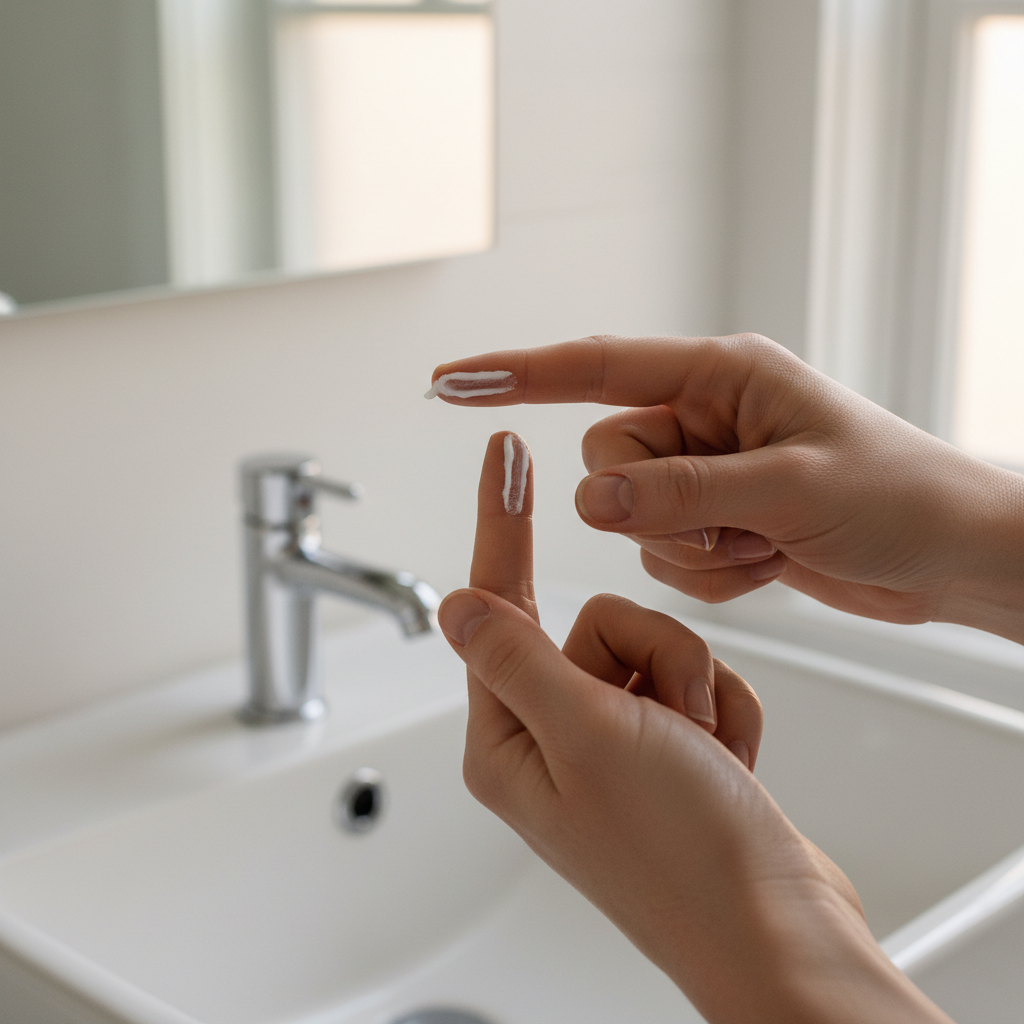
Face, neck, ears: the “two-finger” baseline
A practical rule many dermatology educators use is the two-finger method, squeeze two lines of sunscreen along your index and middle finger for face + neck. If you have a larger face/neck area or a thick beard line, you may need a bit more.
Body: think in zones
Instead of trying to cover everything at once, break it into zones so you don’t miss patches when you’re rushing out of a hotel.
- Arms and hands (don’t forget wrists and between fingers)
- Neck, chest, and shoulders
- Legs and tops of feet
- Back of neck and ears
Timing that helps it “set”
Apply about 15 minutes before sun when possible, especially for chemical sunscreens, many labels recommend this window so the film forms evenly. Mineral formulas work right away, but still benefit from a minute to settle so you don’t rub it off with clothing.
Your long-travel-day reapplication plan (realistic version)
how to apply sunscreen for long travel days becomes much easier when you decide in advance what your reapply moments are, instead of relying on memory.
Use “travel anchors” to remember
- Before leaving your hotel or home base, full application.
- Midday trigger, lunch stop or first restroom break, quick reapply on face/neck/hands.
- Afternoon trigger, before any outdoor stretch (museum-to-museum walk, theme park line, patio coffee).
- After sweat/water, as soon as you towel off or cool down.
How to reapply when you’re dusty, sweaty, or wearing makeup
- Blot first, a tissue or oil-blotting sheet reduces slip so sunscreen spreads more evenly.
- Layer, don’t smear, press and pat on high points first (forehead, nose, cheeks), then blend outward.
- Use a stick for borders, hairline, ears, around sunglasses, and along the jaw are faster with a stick.
- Powder SPF is a helper, not a hero, it can be convenient for shine, but many people don’t apply enough to match the labeled protection, treat it as a top-up rather than your only reapply.
According to the U.S. Food and Drug Administration, no sunscreen is waterproof, and reapplication matters, especially with swimming or sweating. If your day includes either, plan your reapply like you plan your water breaks.
What to pack: a simple sunscreen kit for transit
You don’t need a complicated bag, you need the right formats in the right places, so you actually use them.
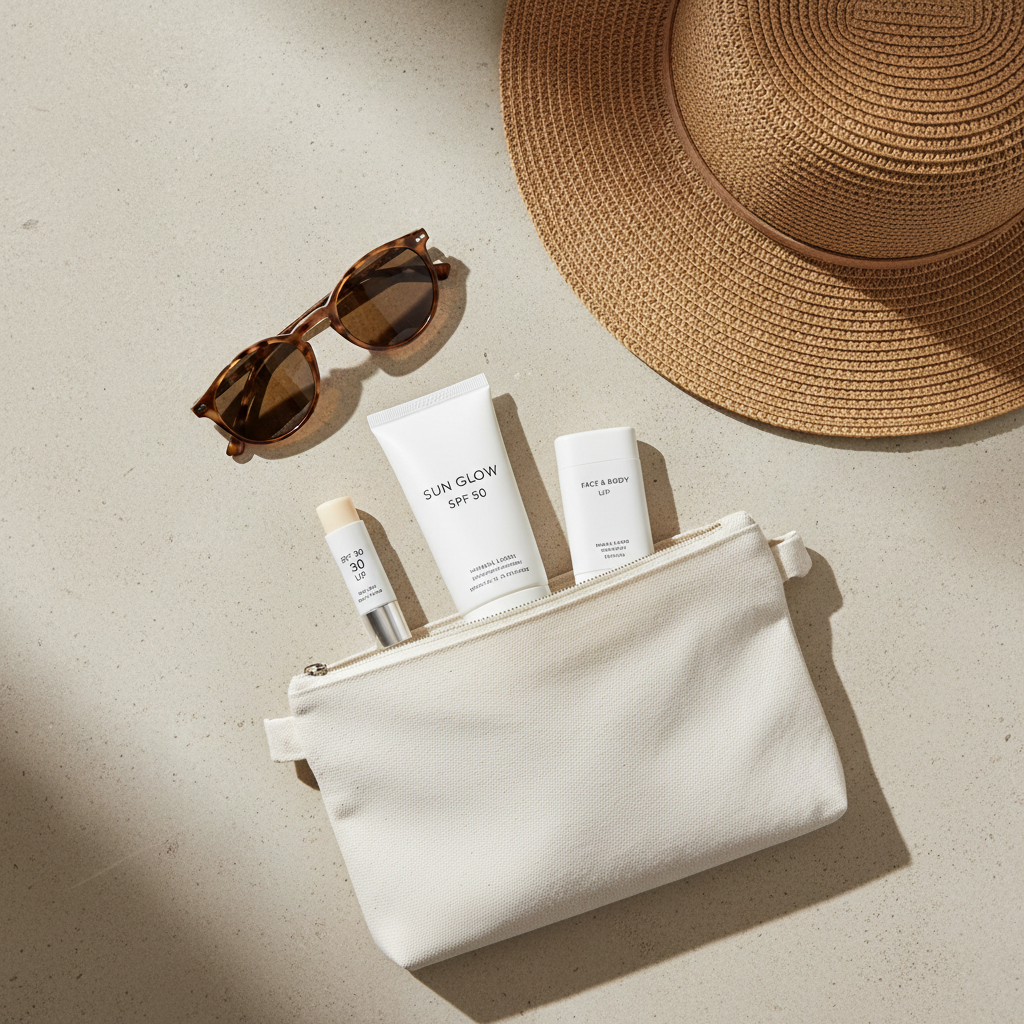
Core items
- TSA-size lotion (face/body, or separate if you prefer)
- Sunscreen stick for edges and quick touch-ups
- SPF lip balm, lips burn more often than people expect
- Hat + sunglasses, physical blockers reduce how often you need heavy reapplication
- Small mirror or phone camera for checking missed spots
Where to keep it so you’ll reapply
- One in your day bag (non-negotiable)
- One by your hotel door or toiletry kit for morning application
- If you’re road-tripping, one in the car console (avoid heat extremes when possible)
Quick scenarios: what to do in common travel days
Different travel days break sunscreen in different ways, here’s a practical playbook.
Airport + flight day
- Apply before leaving for the airport if you’ll be near windows, outdoors, or driving.
- Reapply on face, neck, and hands before landing if you’ll head straight outside.
- If you have sensitive skin, bring moisturizer to buffer dryness, then apply sunscreen on top.
Road trip day
- Don’t skip the left arm and left side of face if you drive, that side often gets more sun.
- Keep a stick accessible, quick swipes at gas stops beat “I’ll do it later.”
Theme park or all-day walking city
- Start with a water-resistant formula even if you’re not swimming, sweat counts.
- Reapply at lunch, then again mid-afternoon, the second reapply is where most people fall off.
Beach or pool day
- Apply generously before you change into swimwear, you’ll miss less skin that way.
- Reapply after toweling off, not after you “feel dry,” because that delay often turns into an hour.
Coverage checklist + reapply timing table
When people think sunscreen “doesn’t work,” it’s often missed zones, not the SPF number. Run this quick check before you step out.
- Ears (front and back)
- Back of neck and hairline part
- Hands, especially knuckles
- Under sunglasses line and bridge of nose
- Tops of feet if you wear sandals
| Travel situation | What to apply | When to reapply |
|---|---|---|
| Light outdoor exposure (errands, short walks) | Face, neck, ears, hands | About every 2 hours if staying outside, sooner if sweating |
| All-day walking (city, theme park) | Face/body + hat/sunglasses | Lunch, mid-afternoon, and after heavy sweat |
| Beach/pool | Water-resistant on all exposed skin | Every 2 hours and after swimming or toweling |
| Road trip with frequent stops | Face, left arm/hand, neck | At gas/coffee stops, plus before long outdoor breaks |
Common mistakes that waste your effort
These are the patterns that show up again and again, especially on travel days when you’re distracted.
- Using too little, a thin layer can leave you under-protected even with high SPF.
- Waiting until you burn, by the time you feel heat, damage may already be happening.
- Skipping reapply because it’s cloudy, UV can still reach skin through clouds.
- Relying only on spray, sprays can be uneven and easy to miss spots, if you use them, spray generously and rub in.
- Ignoring expiration, old sunscreen may not perform as intended, especially if stored hot in a car.
When to get personalized advice
If you burn very easily, have a history of skin cancer, take medications that increase sun sensitivity, or deal with chronic skin conditions like eczema or rosacea, it’s smart to ask a dermatologist for tailored product guidance. Also consider professional advice for children, pregnancy-related skin sensitivity, or severe sunscreen reactions, since ingredient tolerance can vary.
Key takeaways for long travel days
- Apply enough, for most adults, face and neck often need more than a casual dab.
- Pre-plan reapply moments, tie them to lunch and restroom breaks so you don’t rely on memory.
- Pack for convenience, a small lotion plus a stick covers most “I’m on the go” problems.
- Don’t negotiate with missed zones, ears, hands, hairline, and feet are frequent burn spots.
For your next trip, set one simple rule: do a full application before you leave, then commit to one midday reapply no matter what, it’s the highest-return habit for long itineraries. If you want to tighten it further, add a second reapply before the afternoon outdoor stretch and keep a stick within reach.